Design System — UI Gallery
A living gallery of real UI screenshots captured from the Companion Intelligence platform. Every surface here — the appliance apps, the cloud plane, the capture tools, the XR clients, the setup portals — is built on one shared design system, so they read as a single product family across web, desktop, and headset.
This is the expanded, multi-screen set: each product below shows several of its key surfaces rather than a single hero, and — where we captured both — every screen is shown in light and dark, auto-swapping with this page’s theme toggle.
The shared design language
- Phthalo accent —
#0a6358in light mode, sage#c5e8dcin dark mode. It is the canonical--primarytoken: buttons, active nav, focus rings, and brand marks. (The pre-v0.3 teal#0f717a/#abd4d8is retired; the lint gate rejects it.) - Deep-navy surfaces — dark mode is grounded in near-black navy (
#041620family) rather than flat black, so elevated cards and teal accents stay legible. - Manrope — the platform typeface across headings and body (Archivo Black for display), with JetBrains Mono reserved for code, keys, and technical read-outs.
- Dual light/dark themes — every product ships both. Where we captured both, the pair below auto-swaps with this page’s theme toggle; single-theme captures are labelled.
The canonical source of truth is the CI-Common UI Style
Guide
and the shared design-token
package
(styles/tokens/src/tokens.json is the one hand-edited source; see
CI-Common’s CONSUMING.md). This page is a visual index of how those tokens
land in shipping product.
Most screenshots are a point-in-time capture from the front-end re-test run on 2026-07-03. The CI Account frames are from October 2026. UIs evolve — treat these as representative, not pixel-current.
CI Account
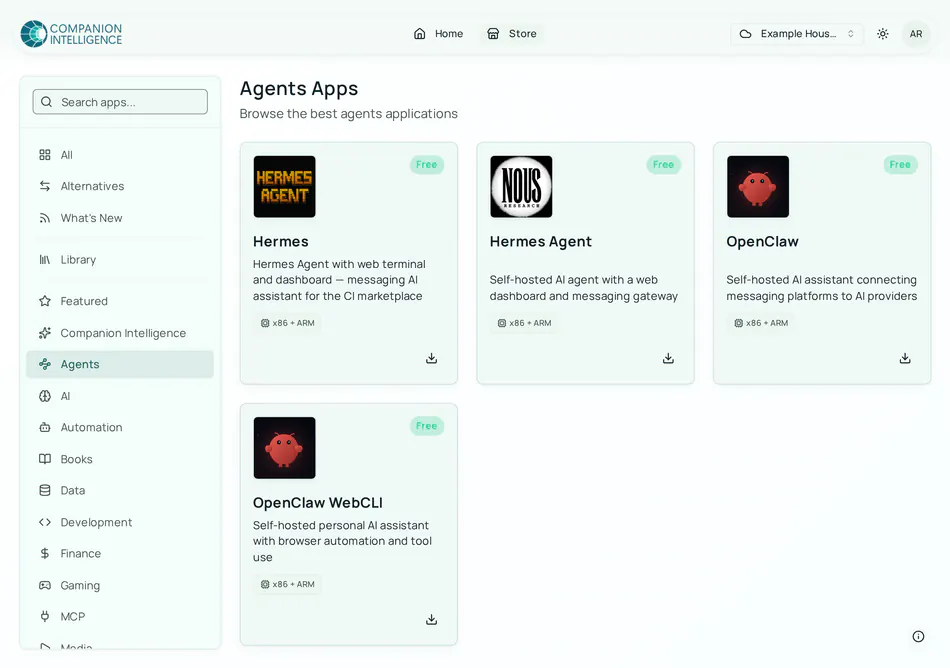
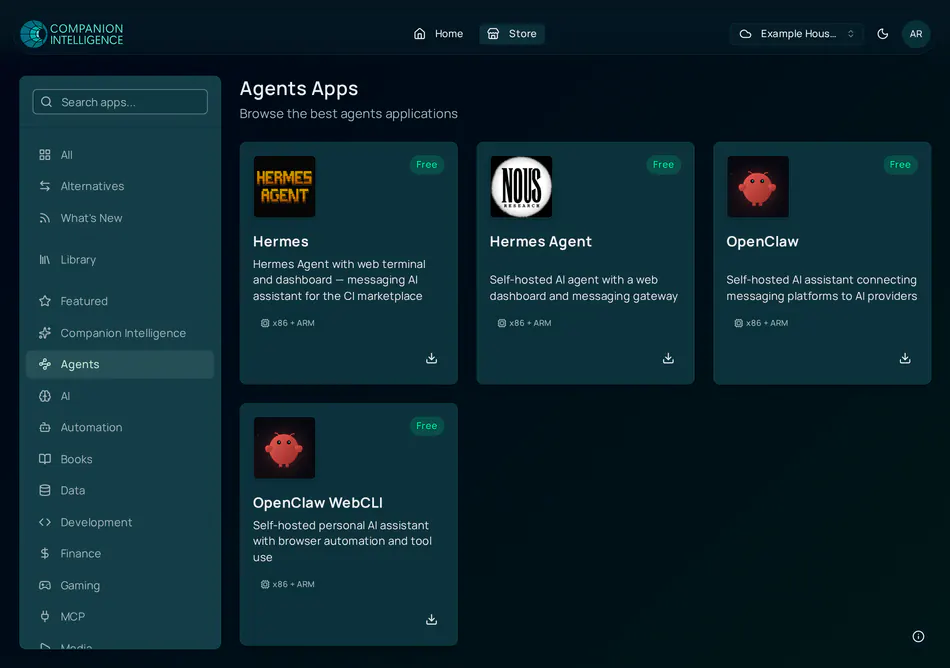
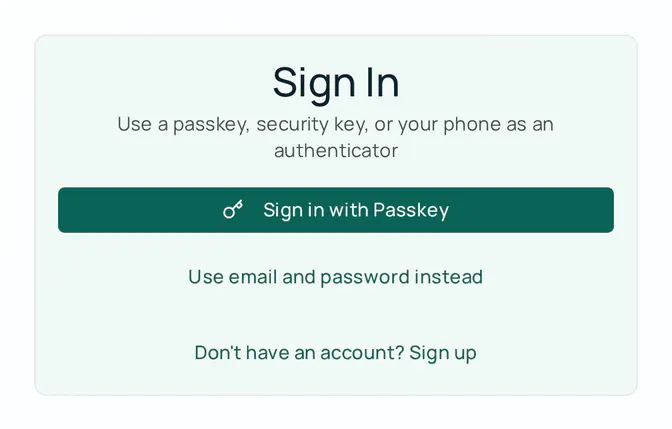
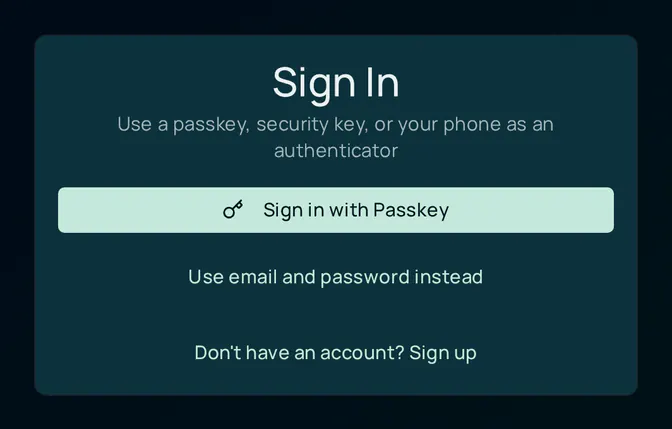
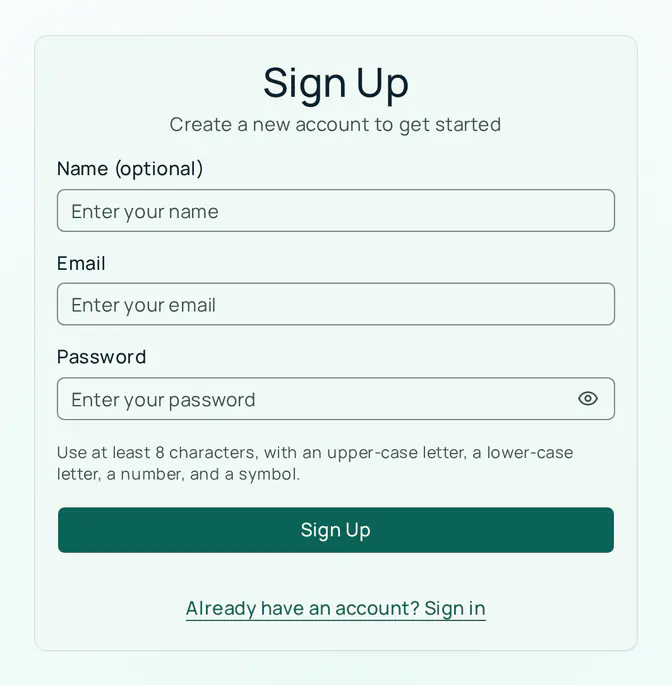
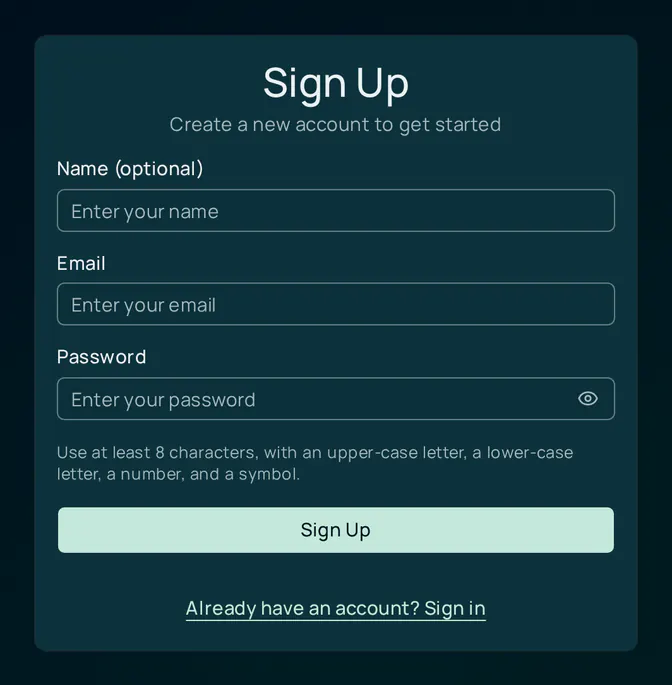
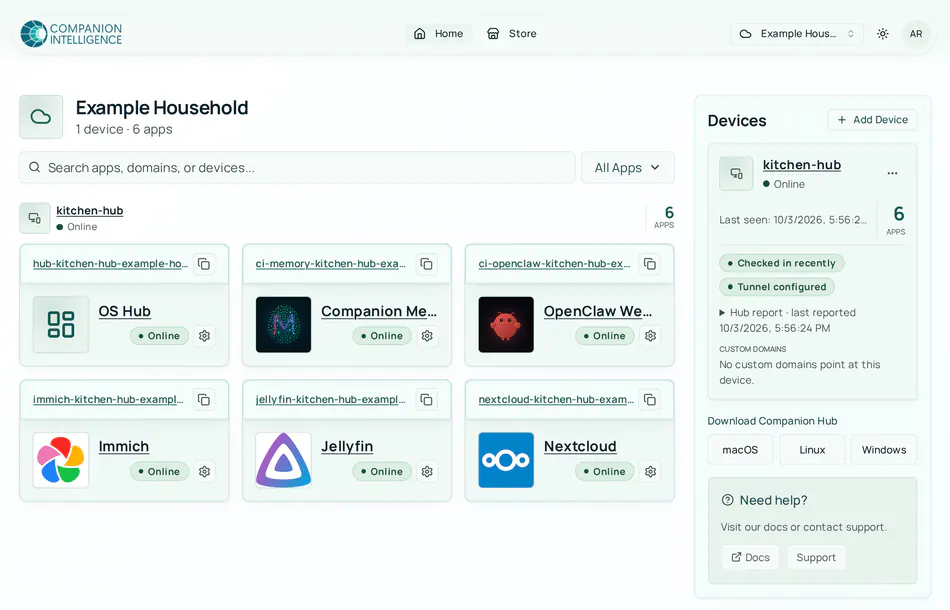
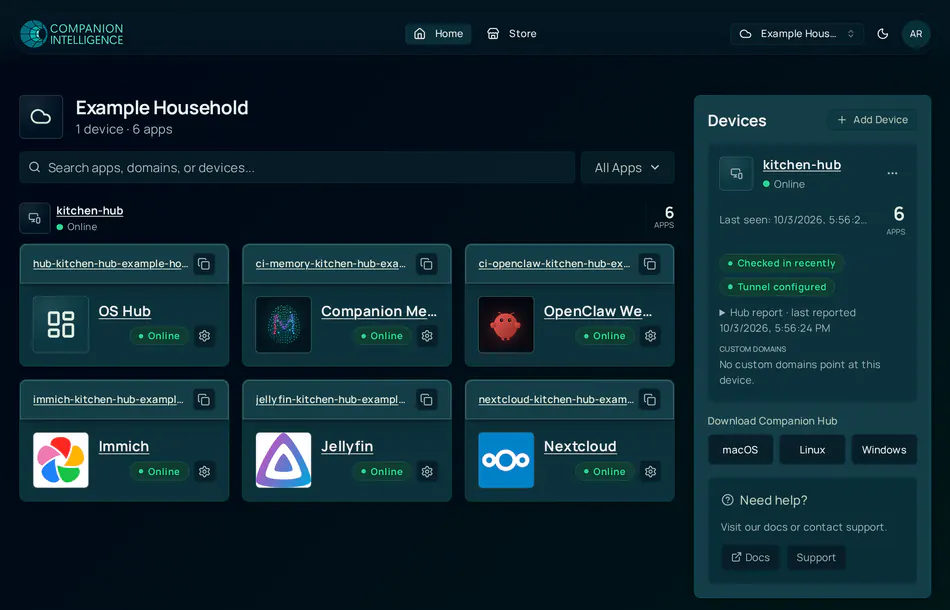
The CI Account and remote app store — the cloud plane surface where you sign in, browse apps, and manage devices. Four surfaces below: the store catalog, the passkey-first sign-in, the email and password sign-up form, and the signed-in Home view. The organization, device, and app data in these frames are example data.
Store — app catalog
Sign in — passkey
Sign up — email & password
Home — signed in
Companion-Planning
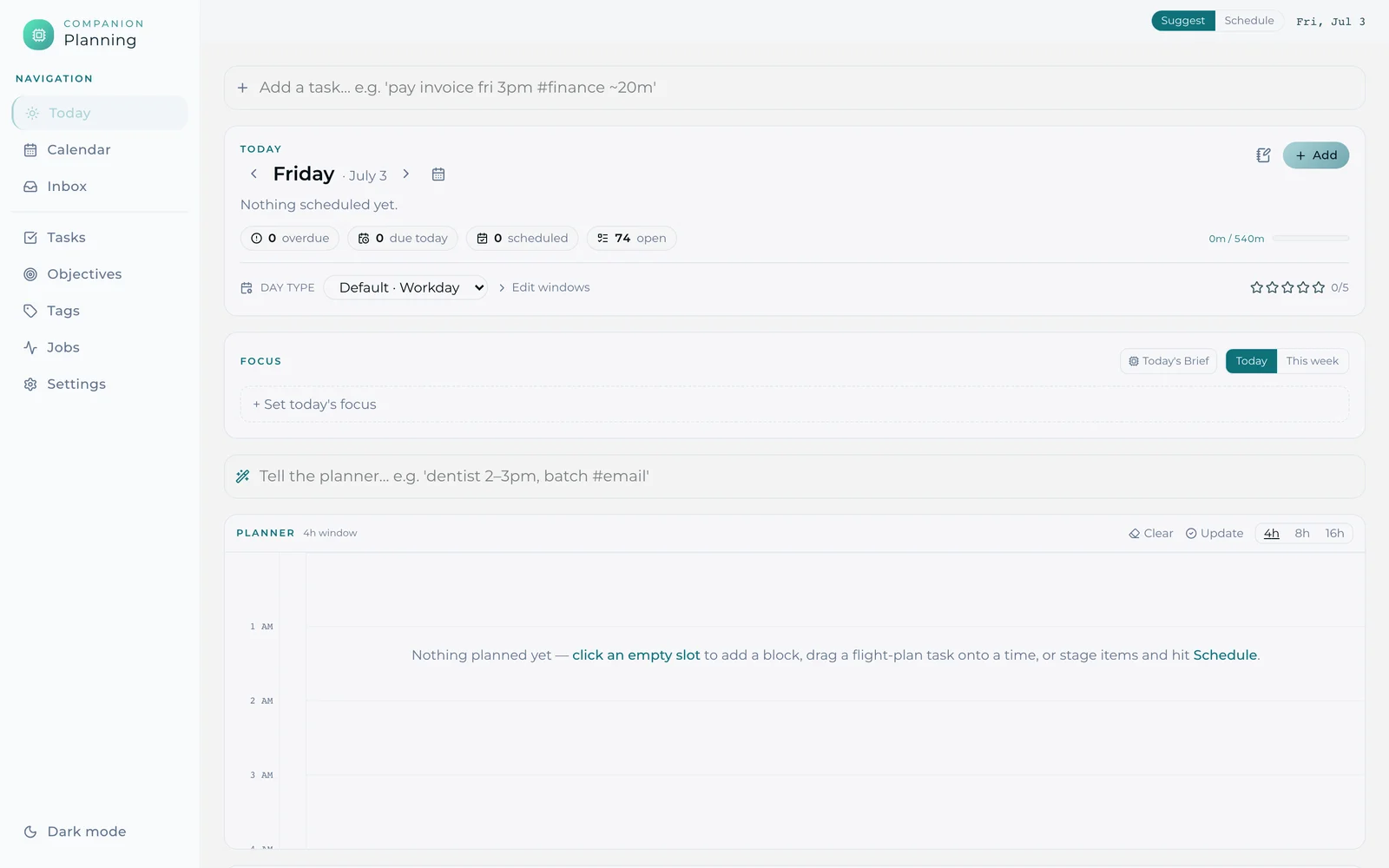
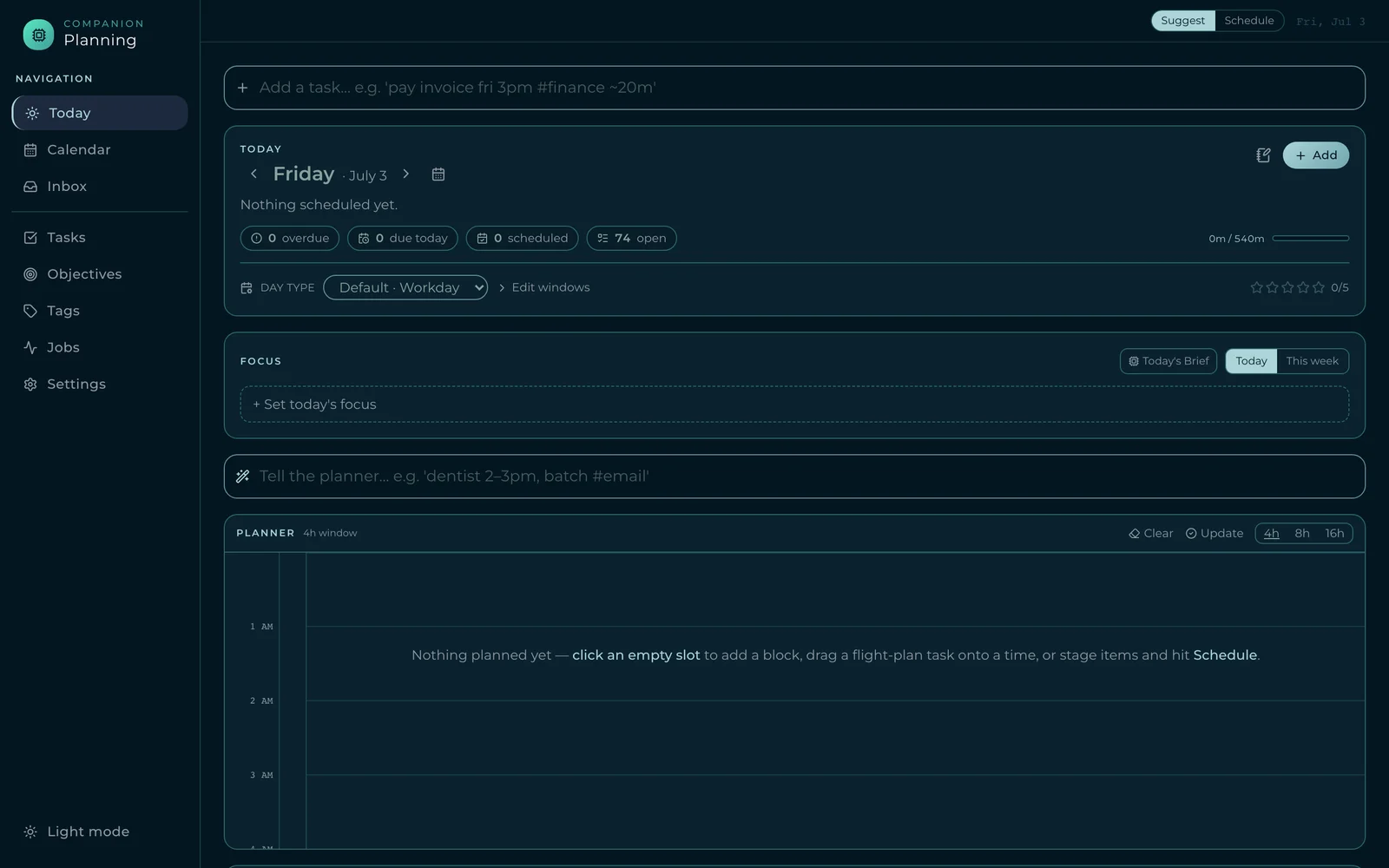
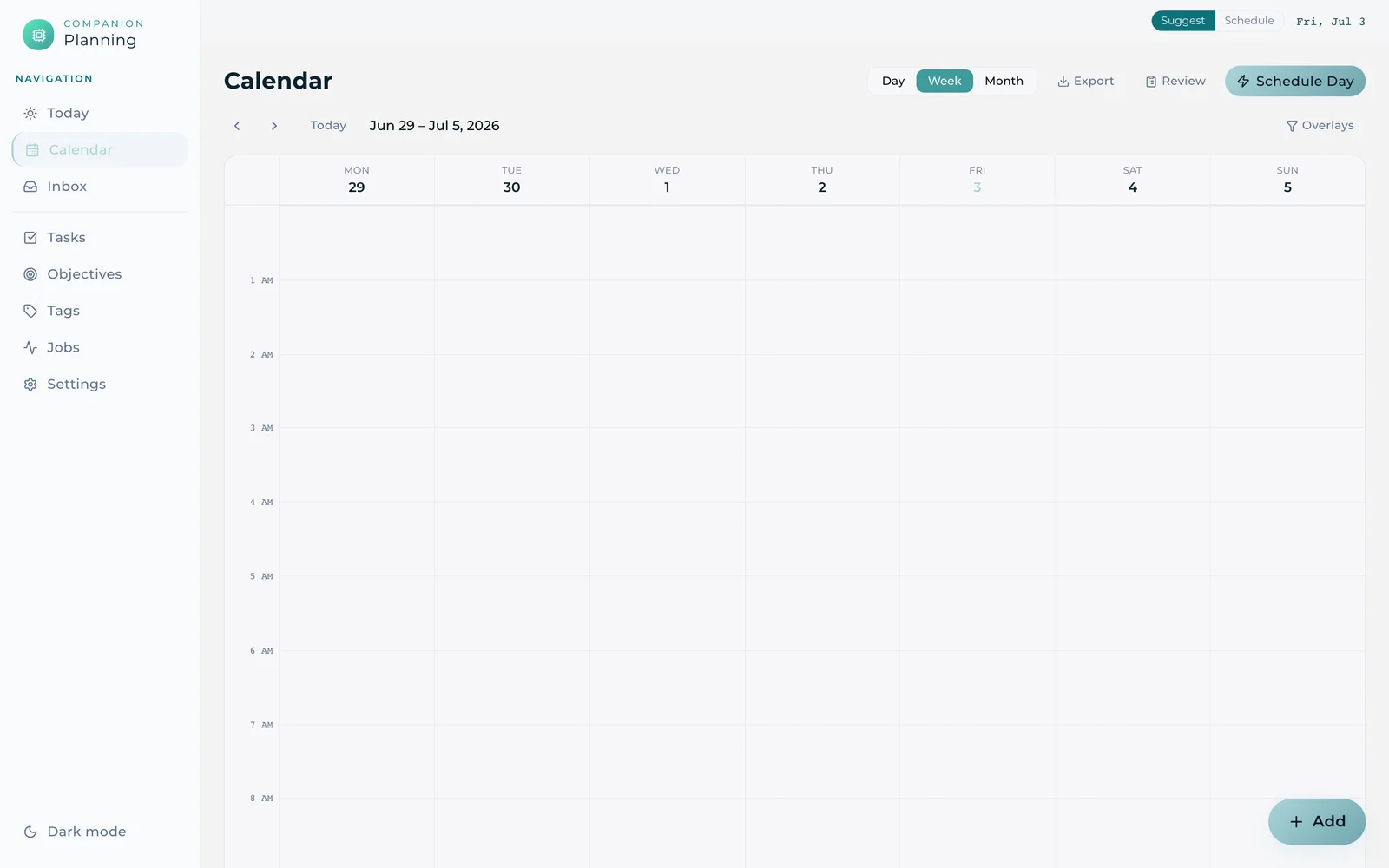
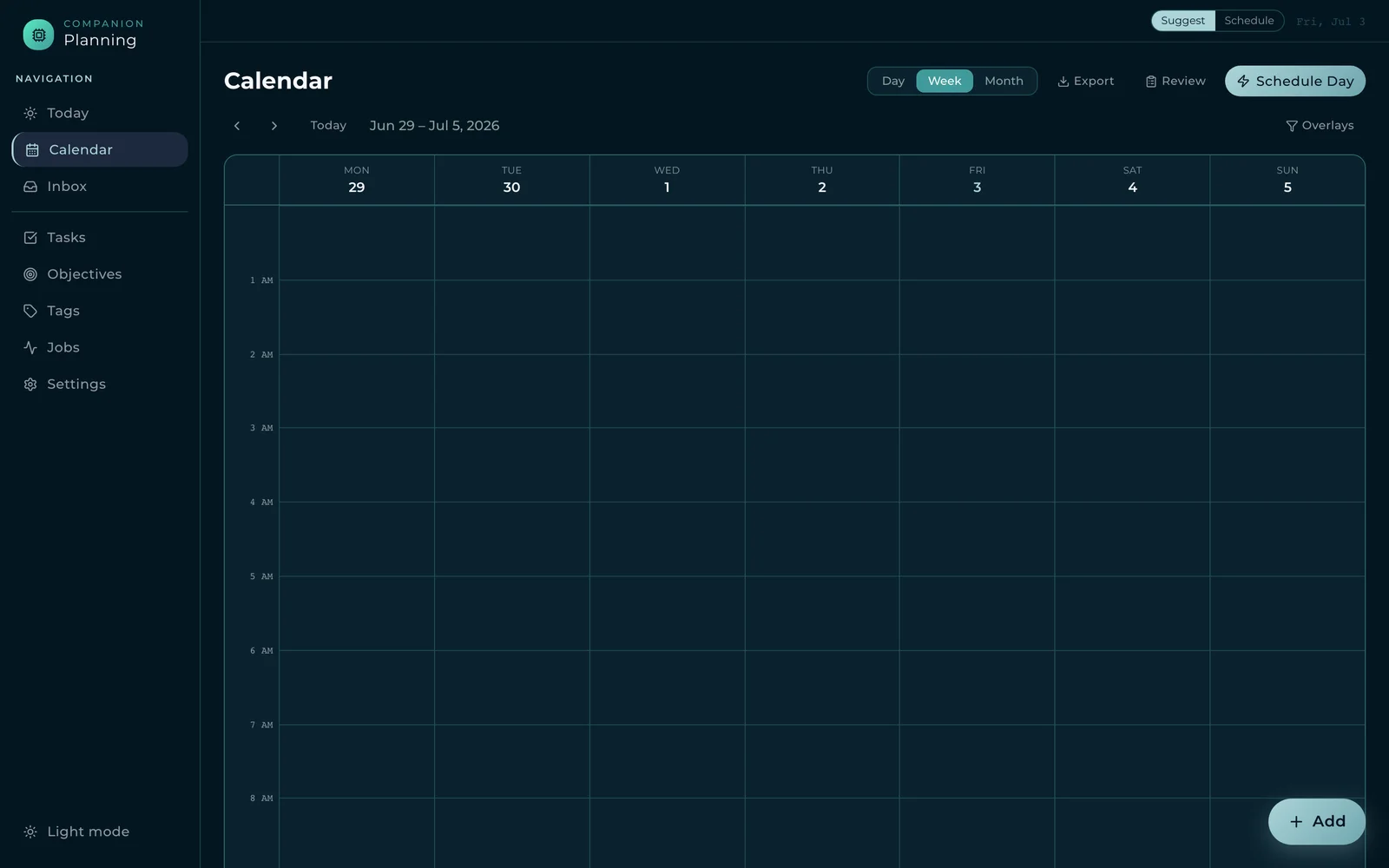
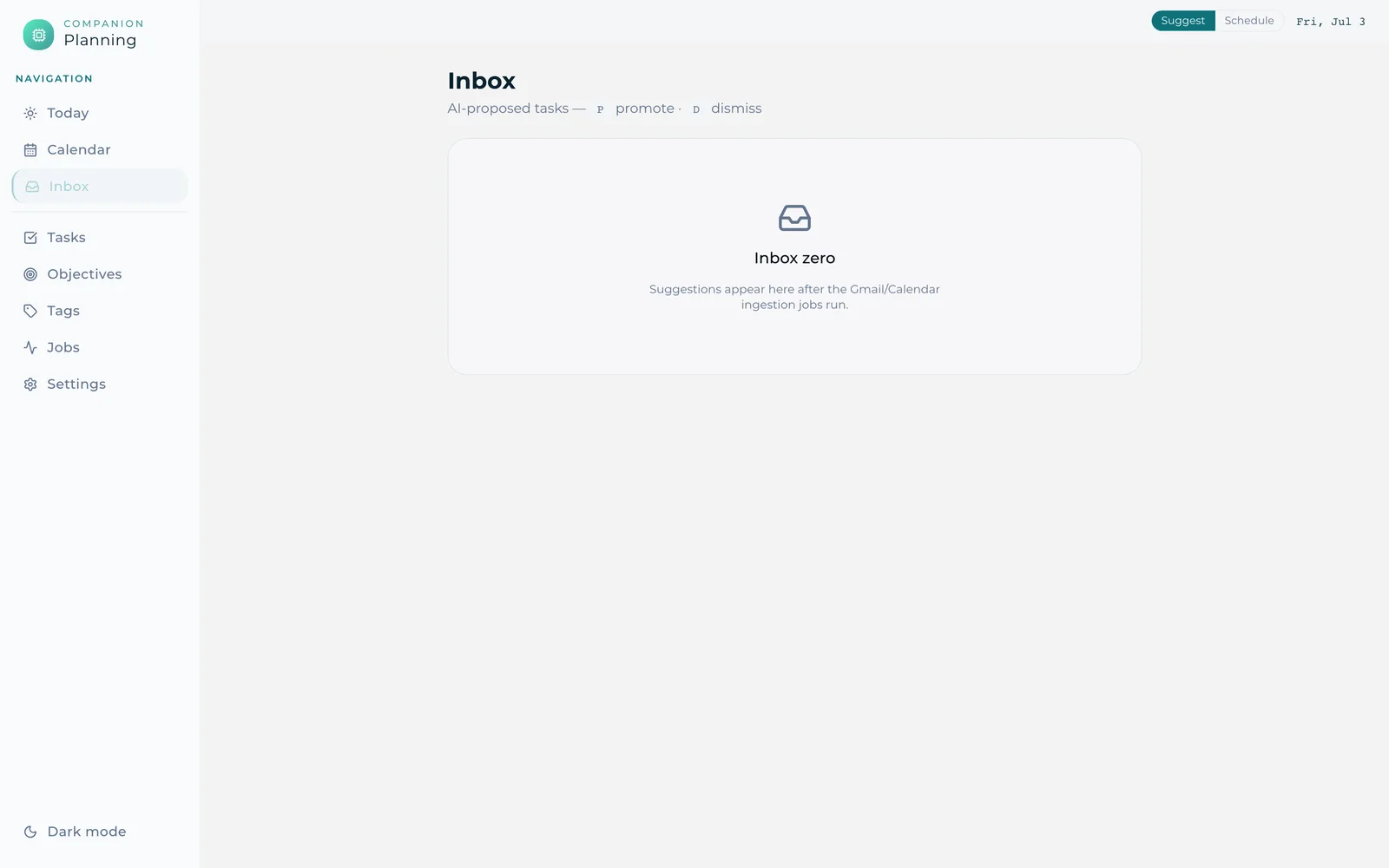
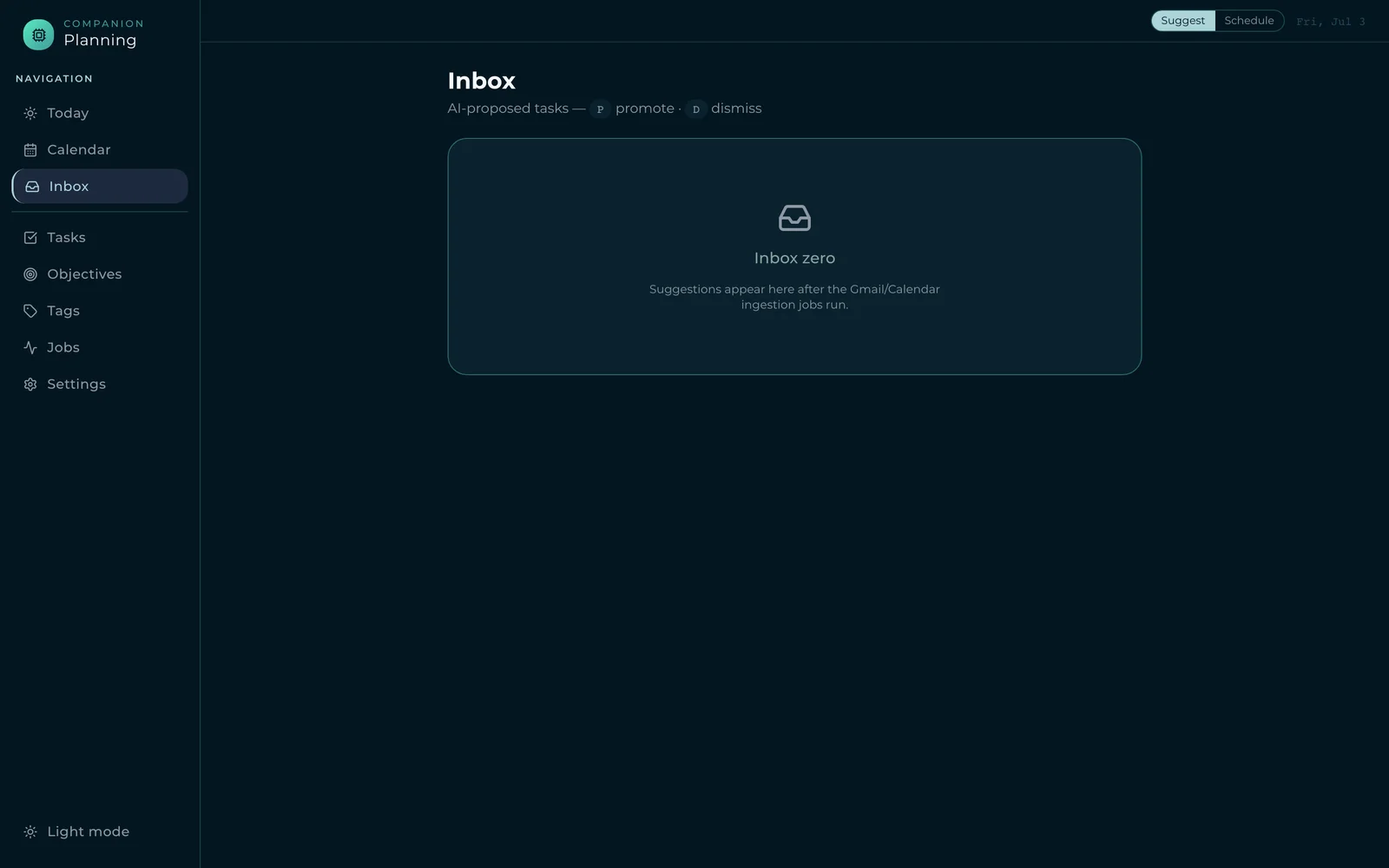
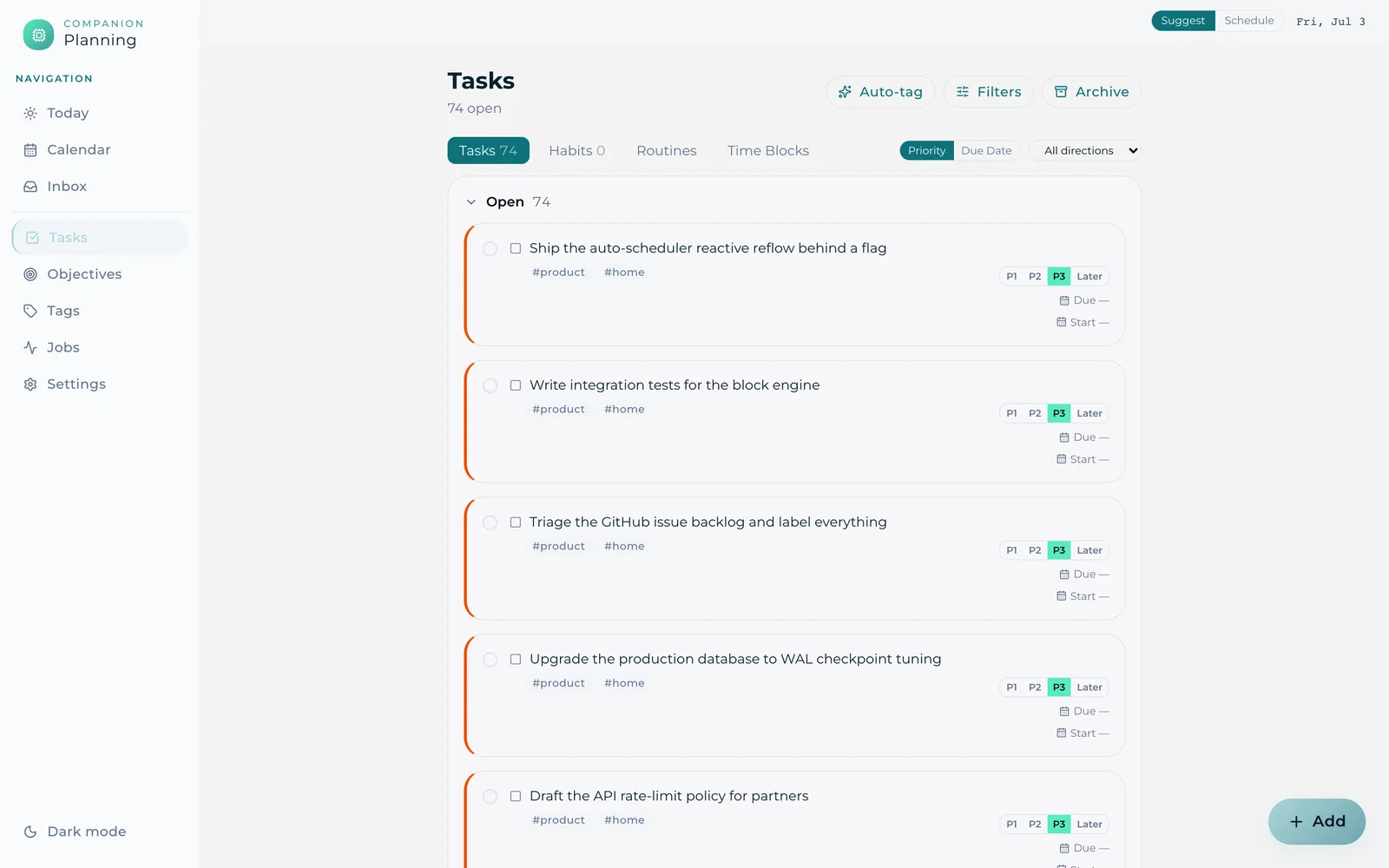
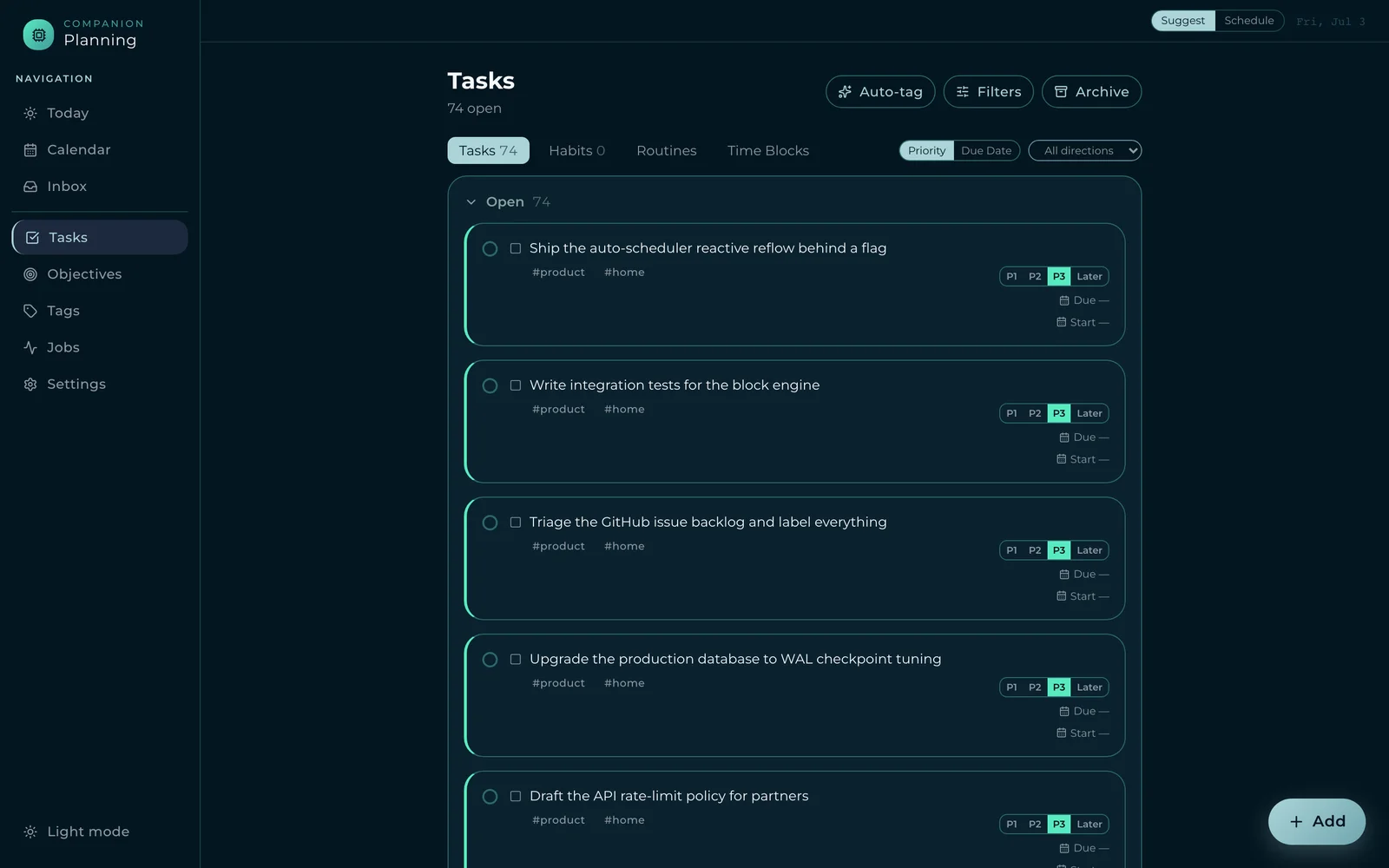
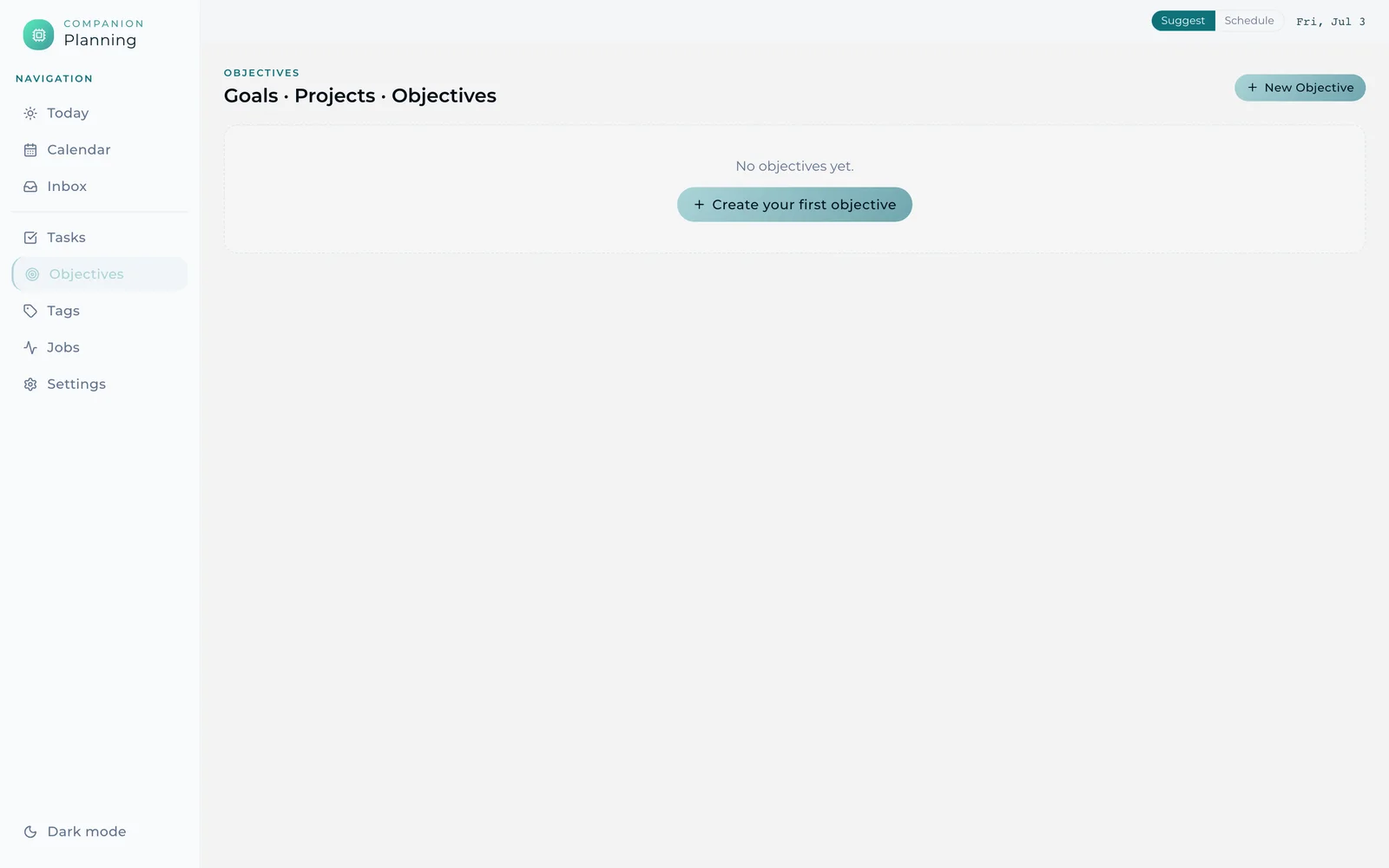
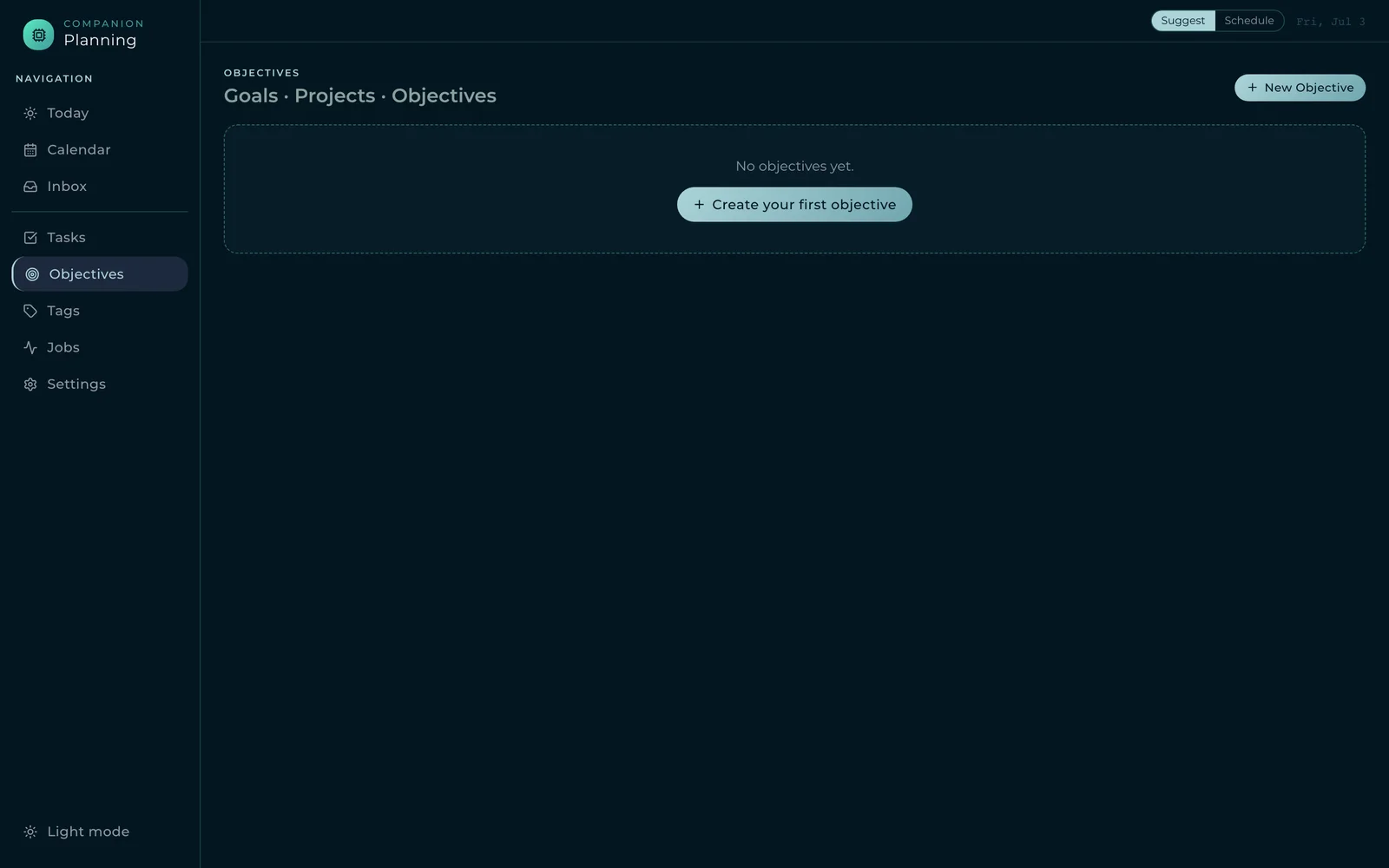
The tasks, habits, and time-blocking app. Five surfaces below walk its primary navigation — Today, Calendar, Inbox, Tasks, and Objectives — with teal carrying selection, priority, and the active nav item.
Today
Calendar
Inbox
Tasks
Objectives
Companion-Pipe
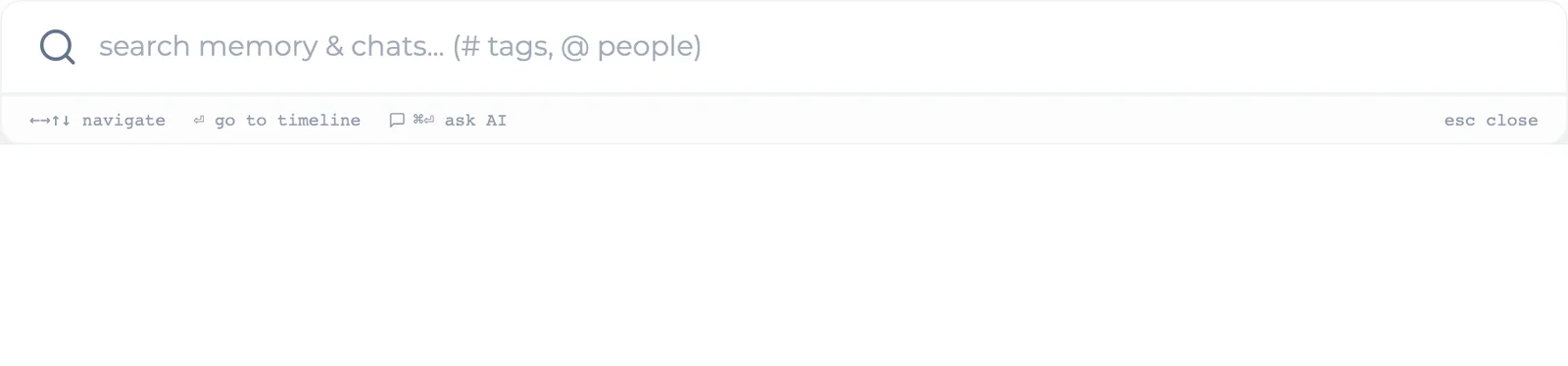
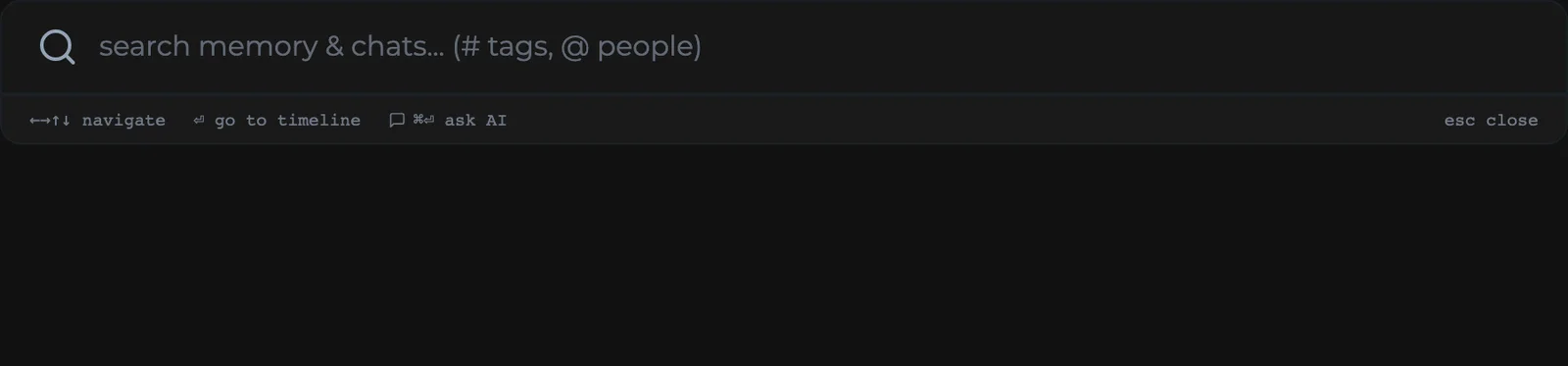
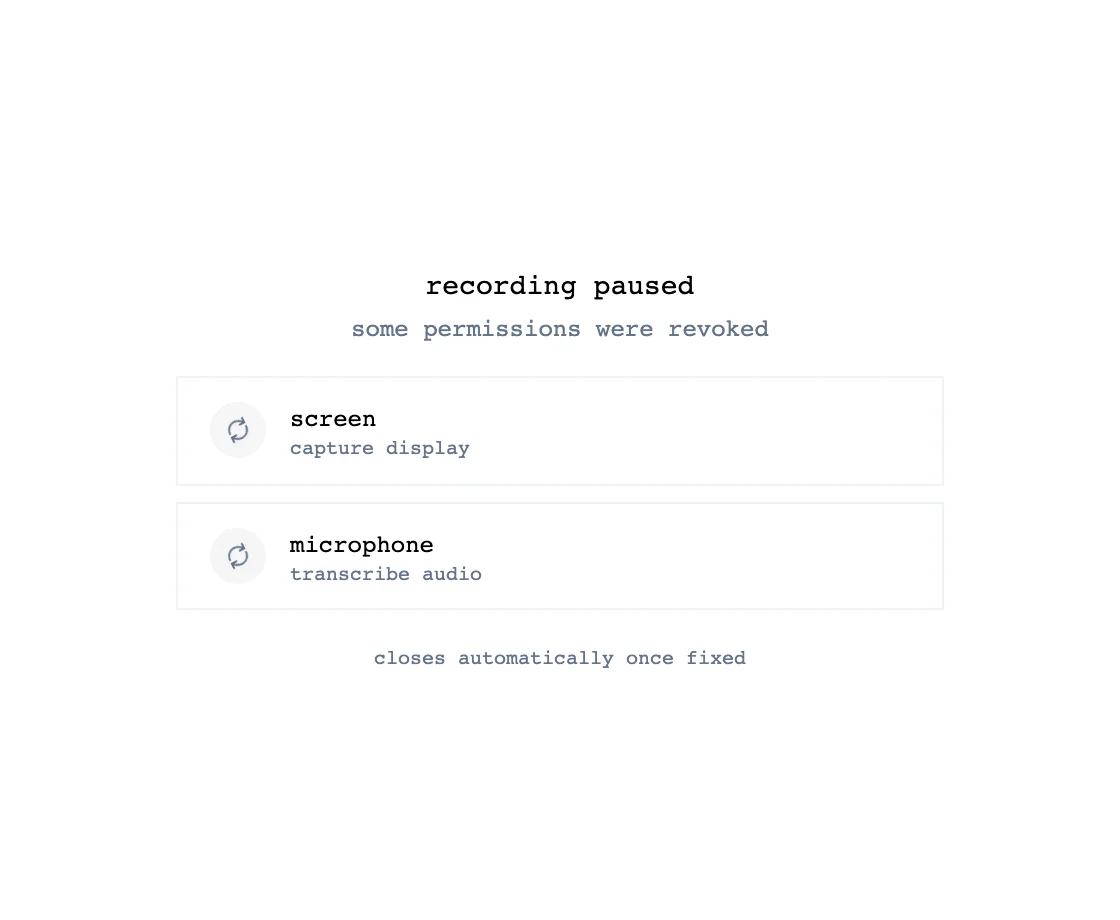
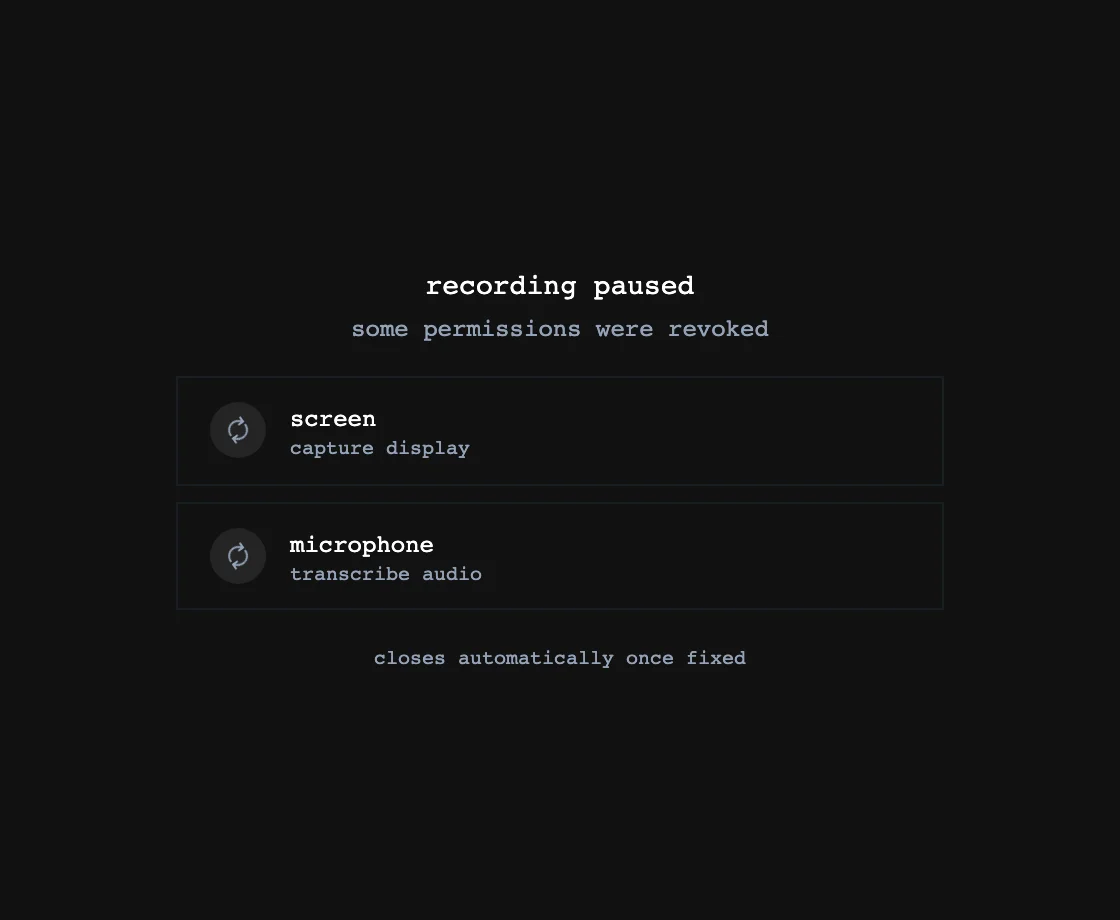
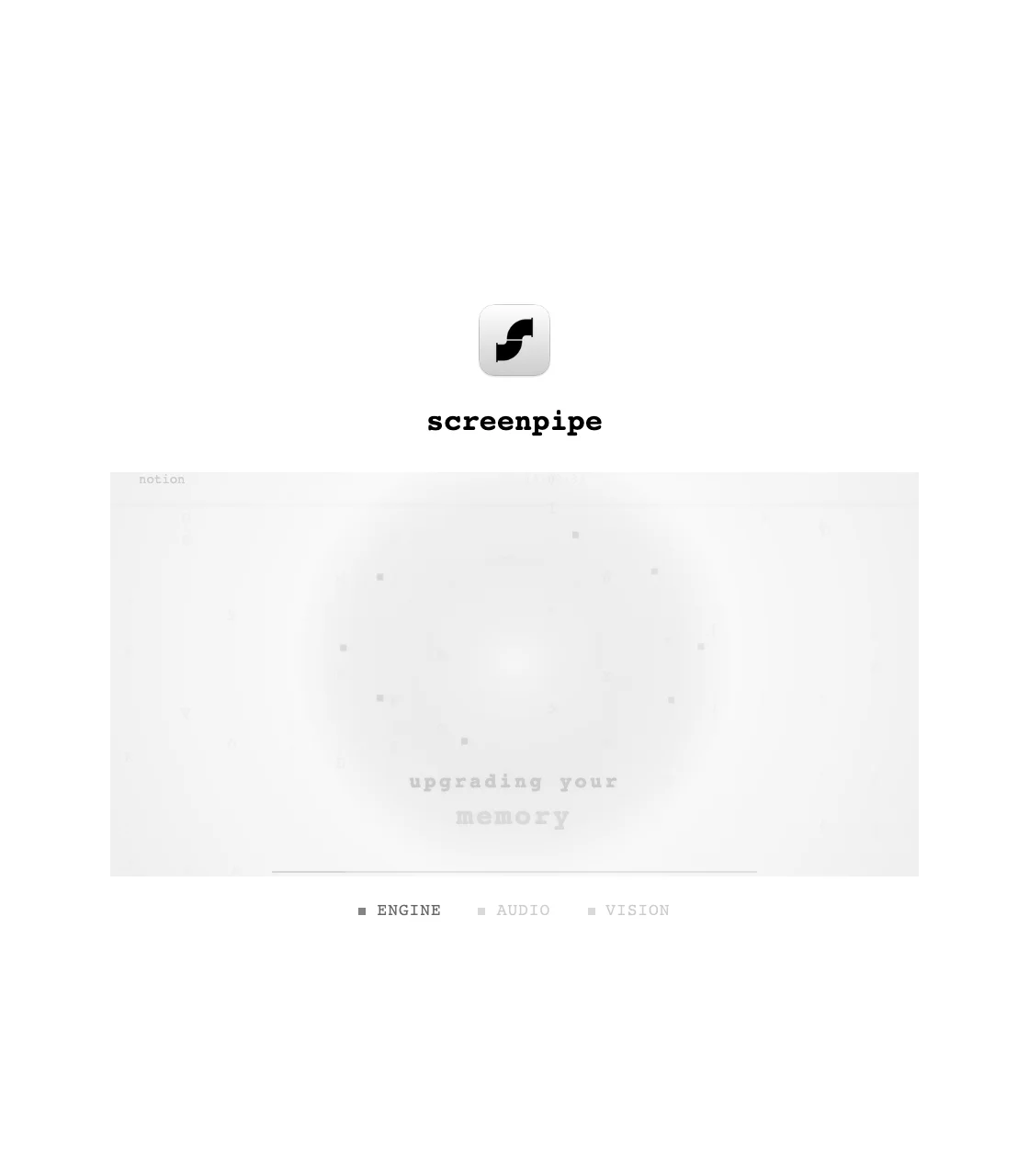
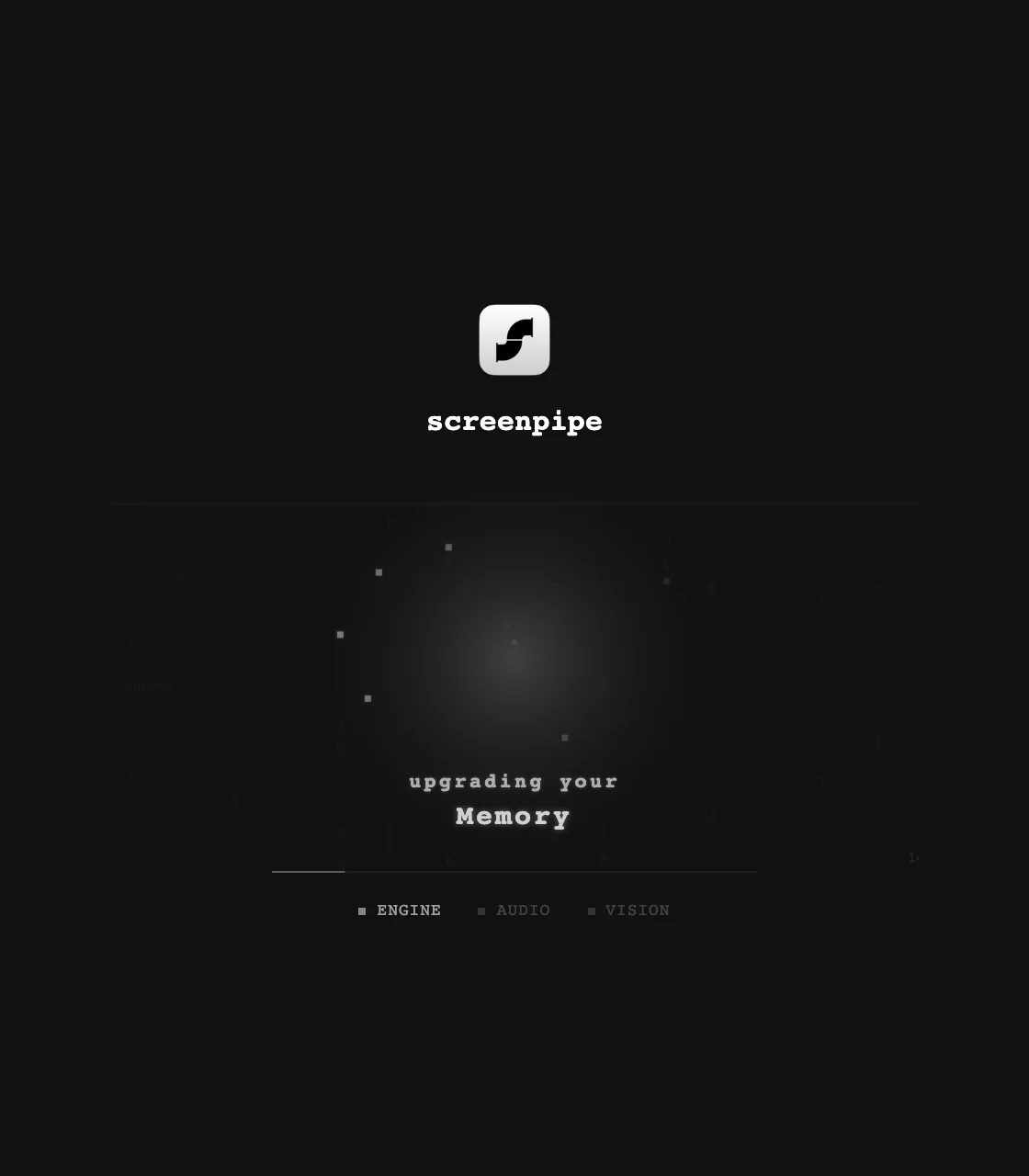
The capture pipe that feeds Companion Memory. Three states from its minimal, monospace-accented UI: the search command bar, the recording-paused permissions notice, and the onboarding splash.
Search
Permissions
Onboarding
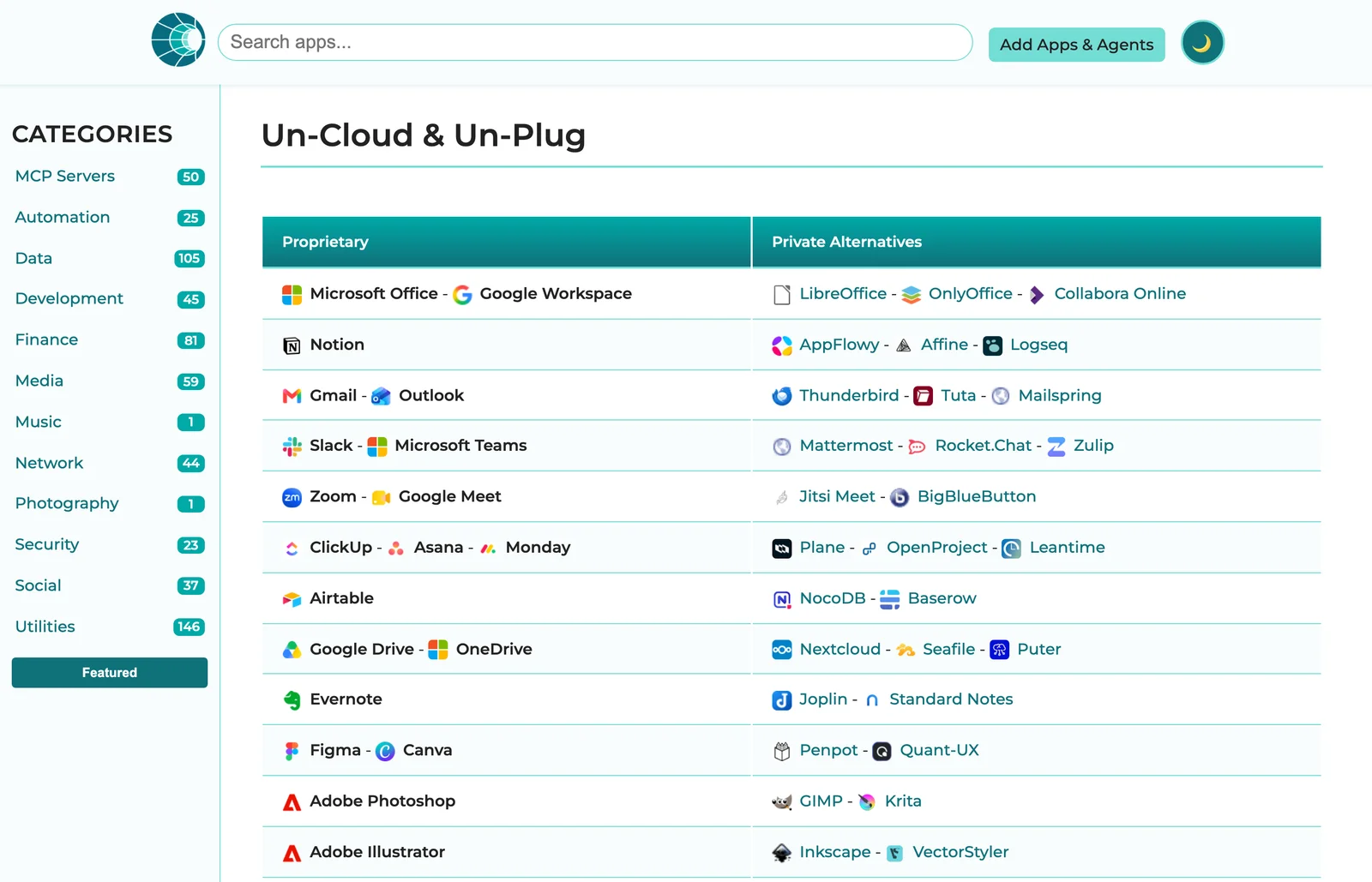
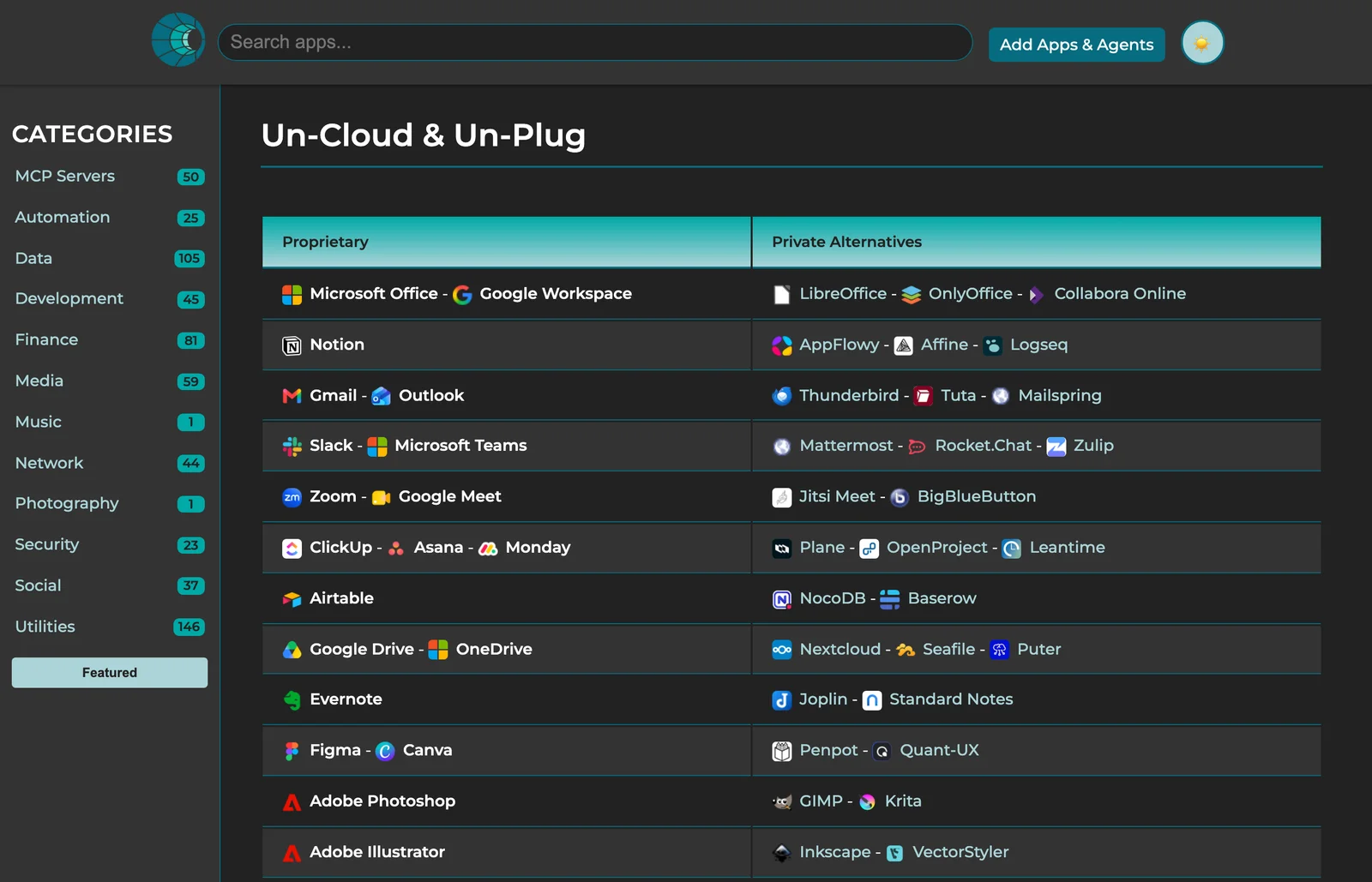
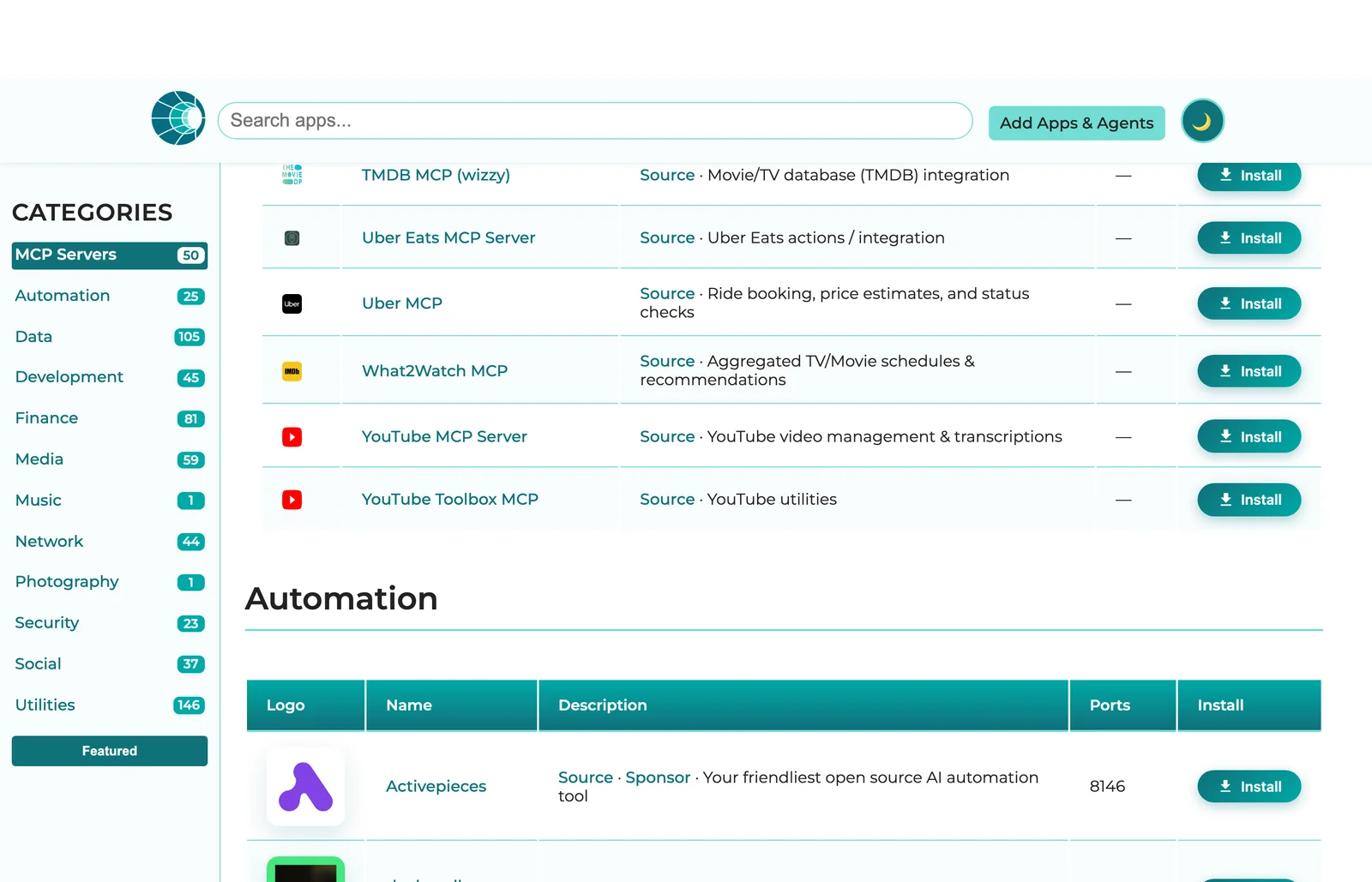
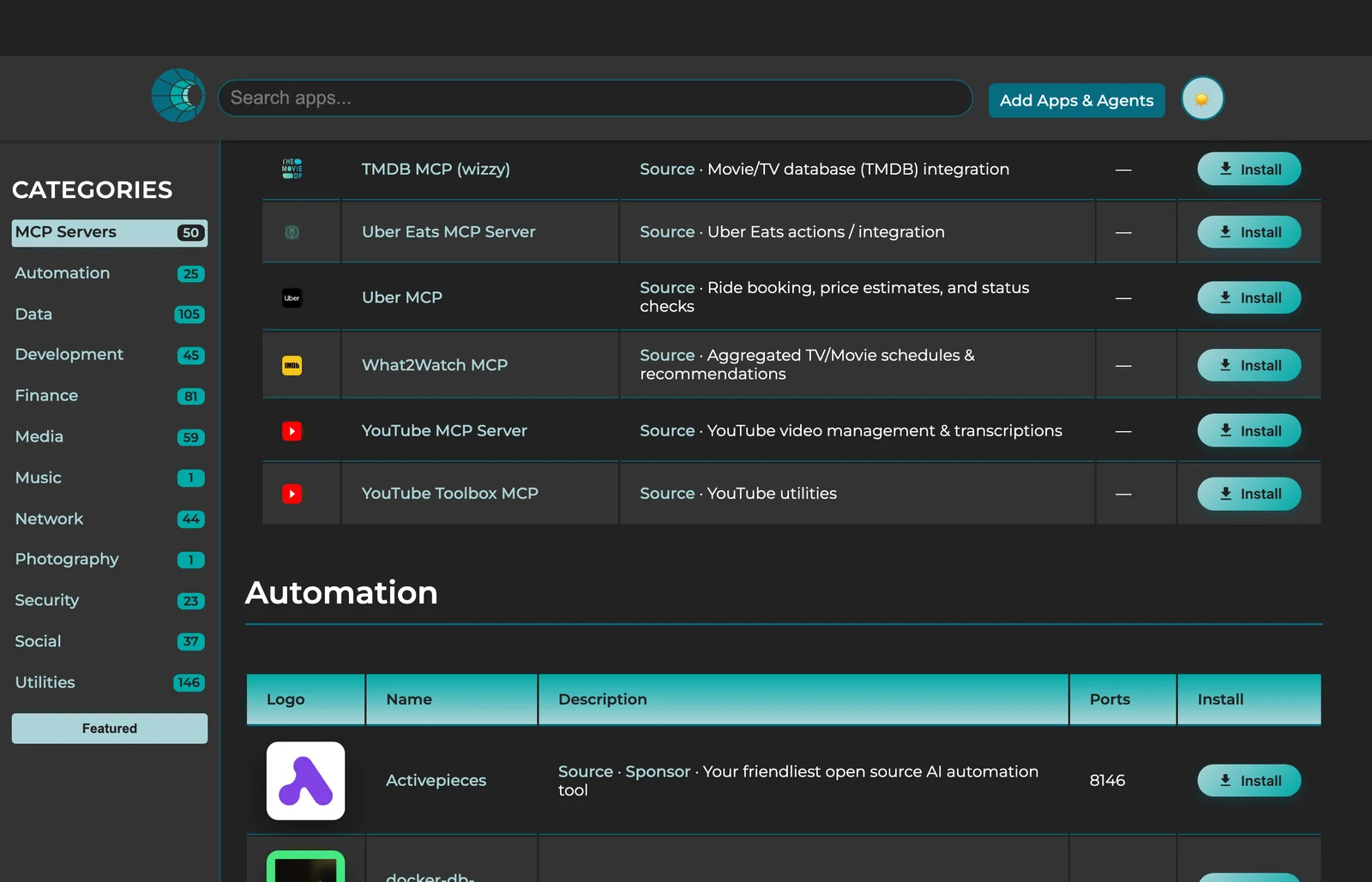
companionintelligence.github.io — App Store
The public app-store site (GitHub Pages, built from the marketplace catalog). Two views: the ‘Un-Cloud & Un-Plug’ alternatives table mapping proprietary tools to private, self-hostable ones, and the categorized install grid.
Un-Cloud & Un-Plug
Apps grid
CI-Docs (this site)
The documentation site you are reading — the same phthalo --primary, Manrope,
and light/dark surfaces the rest of the platform uses. Two surfaces: the
Documentation home with its Quick Guides grid, and an interior doc page with the
sidebar and on-this-page rail.
Home
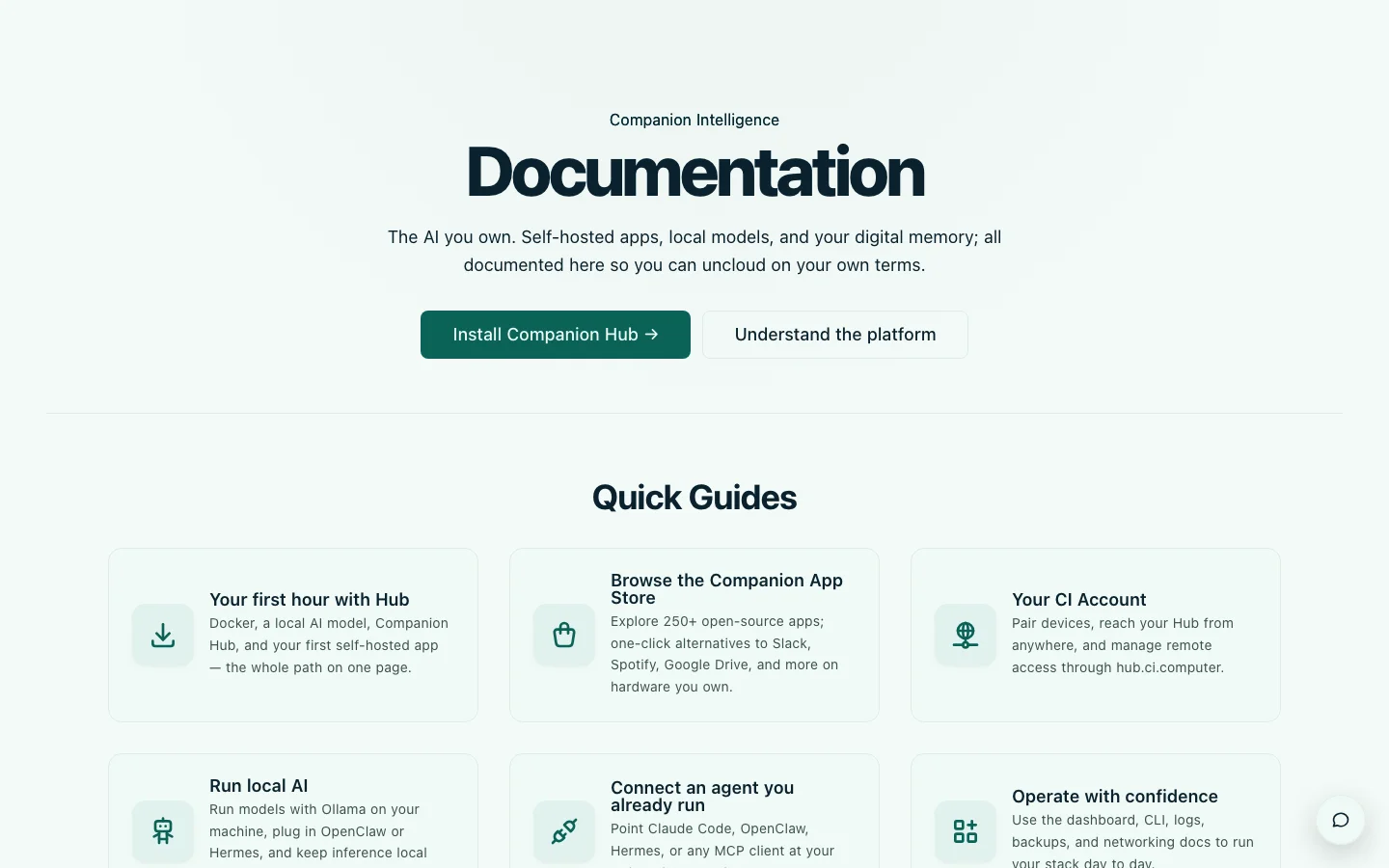
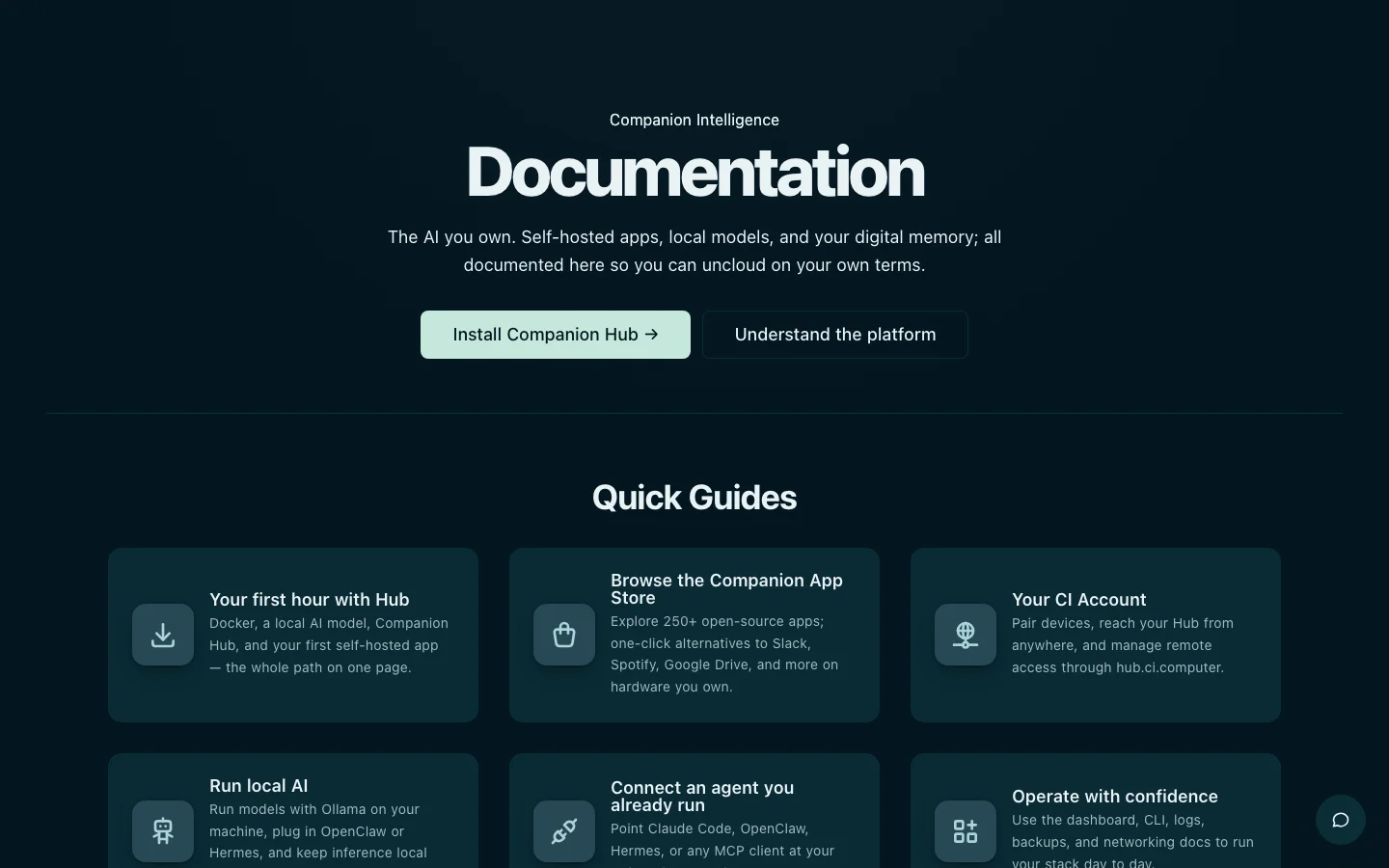
Doc page
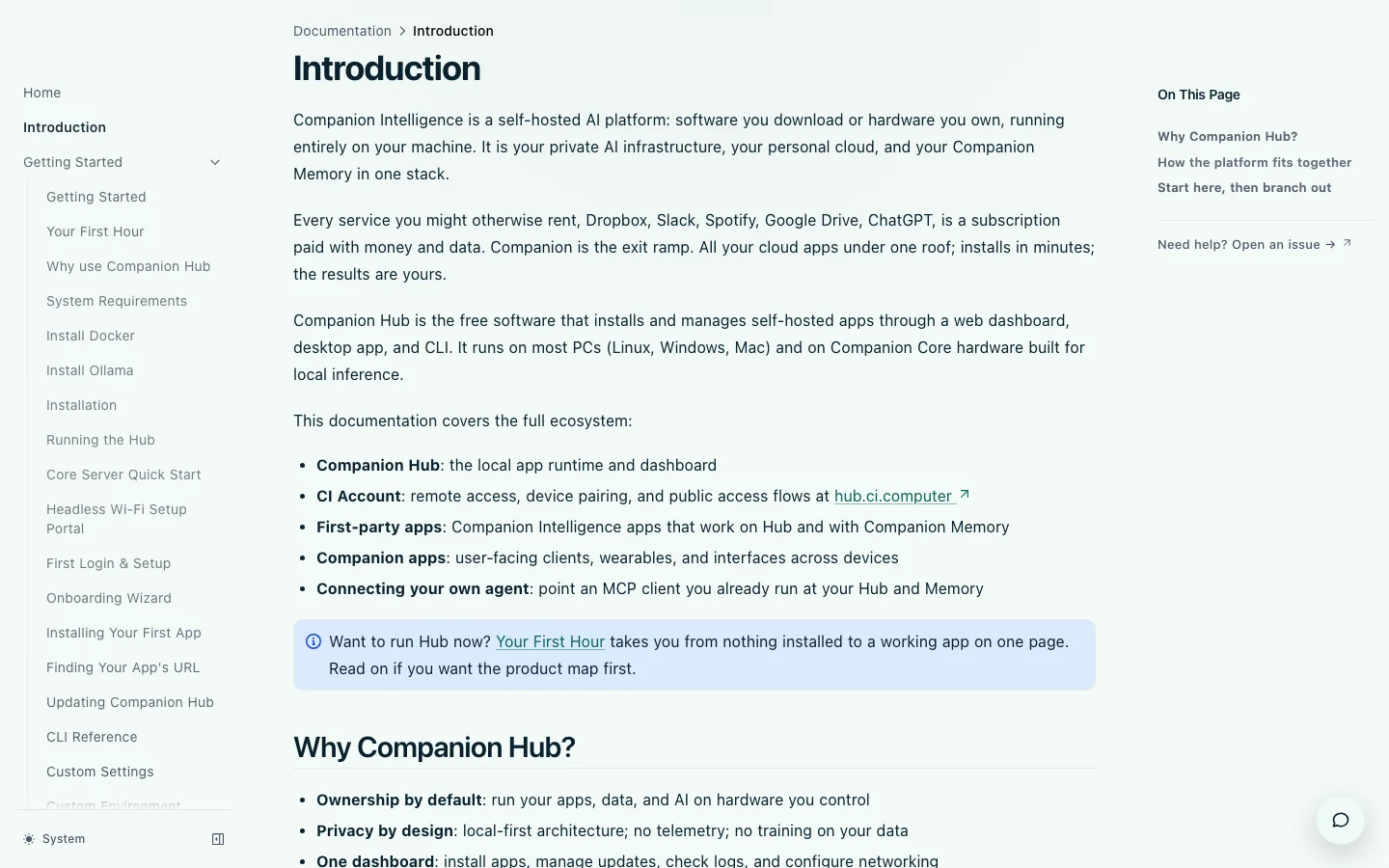
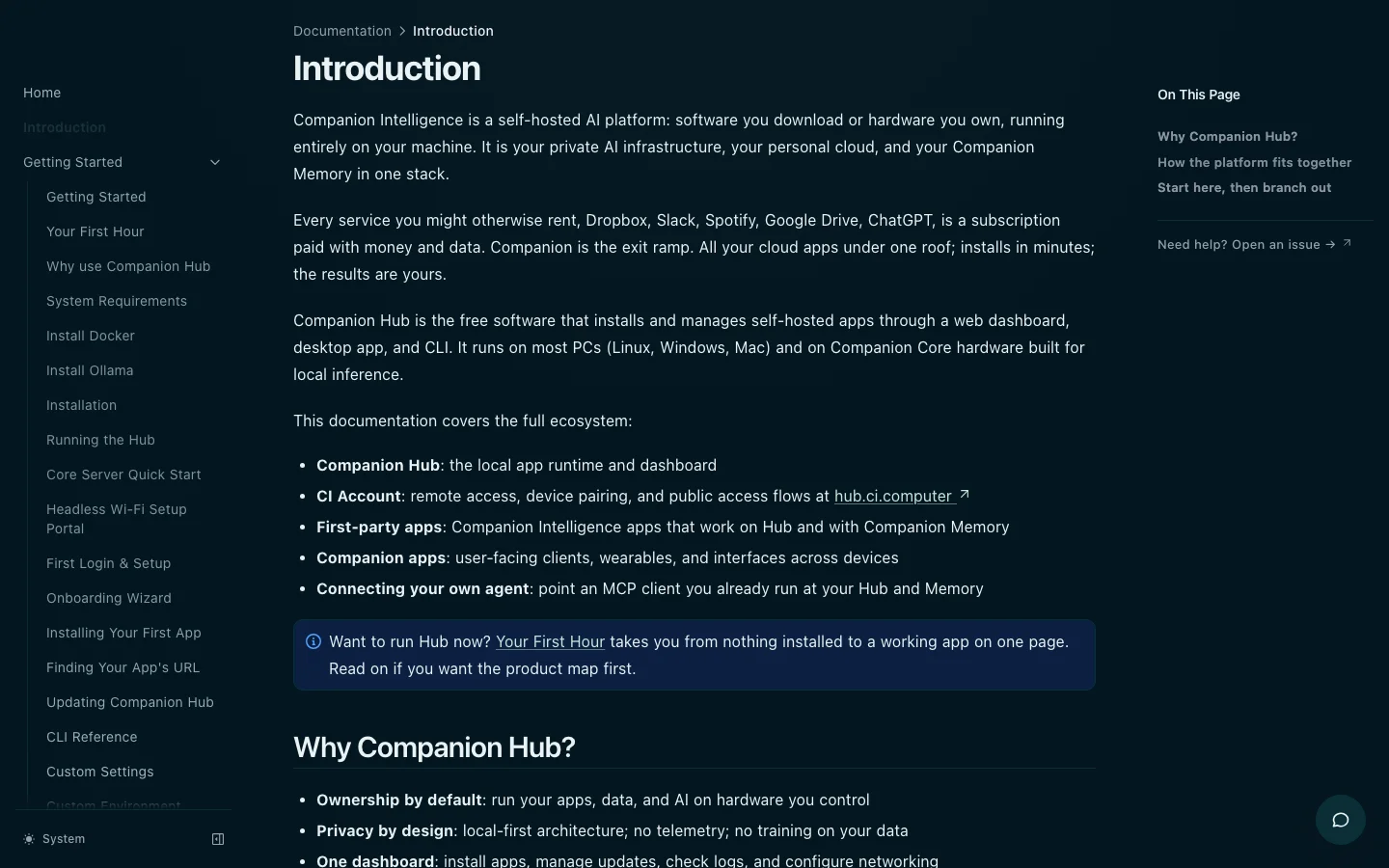
JustInCase
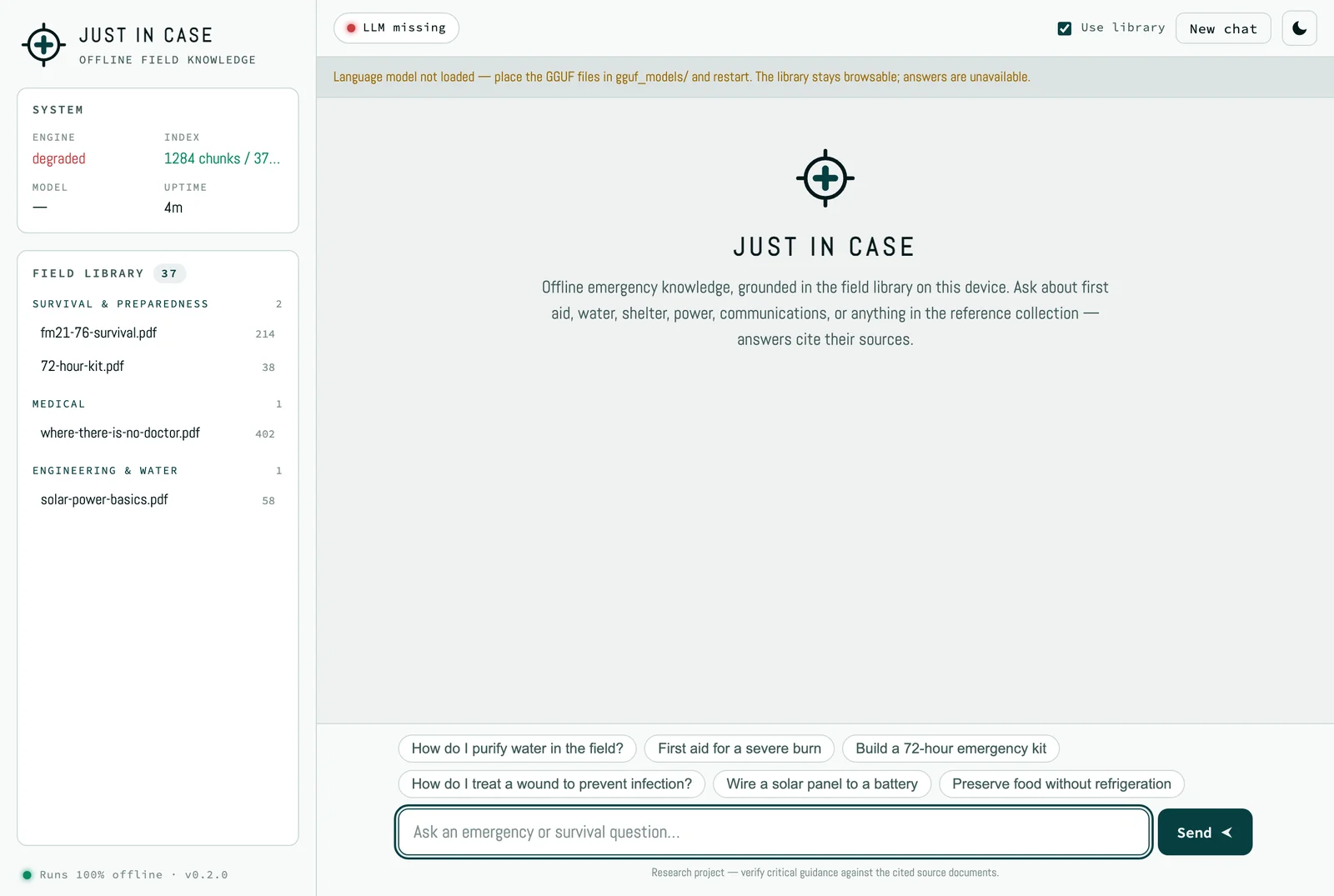
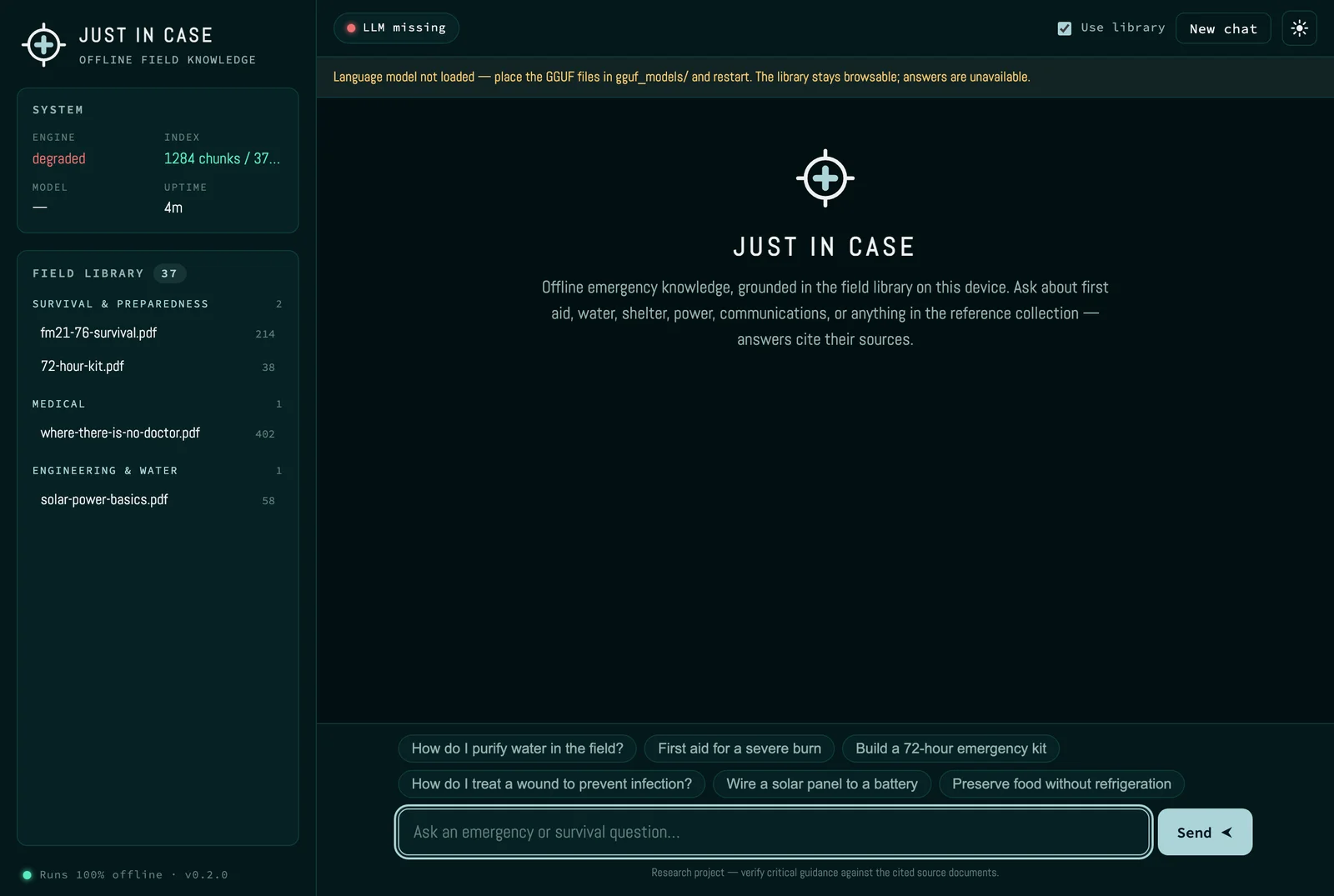
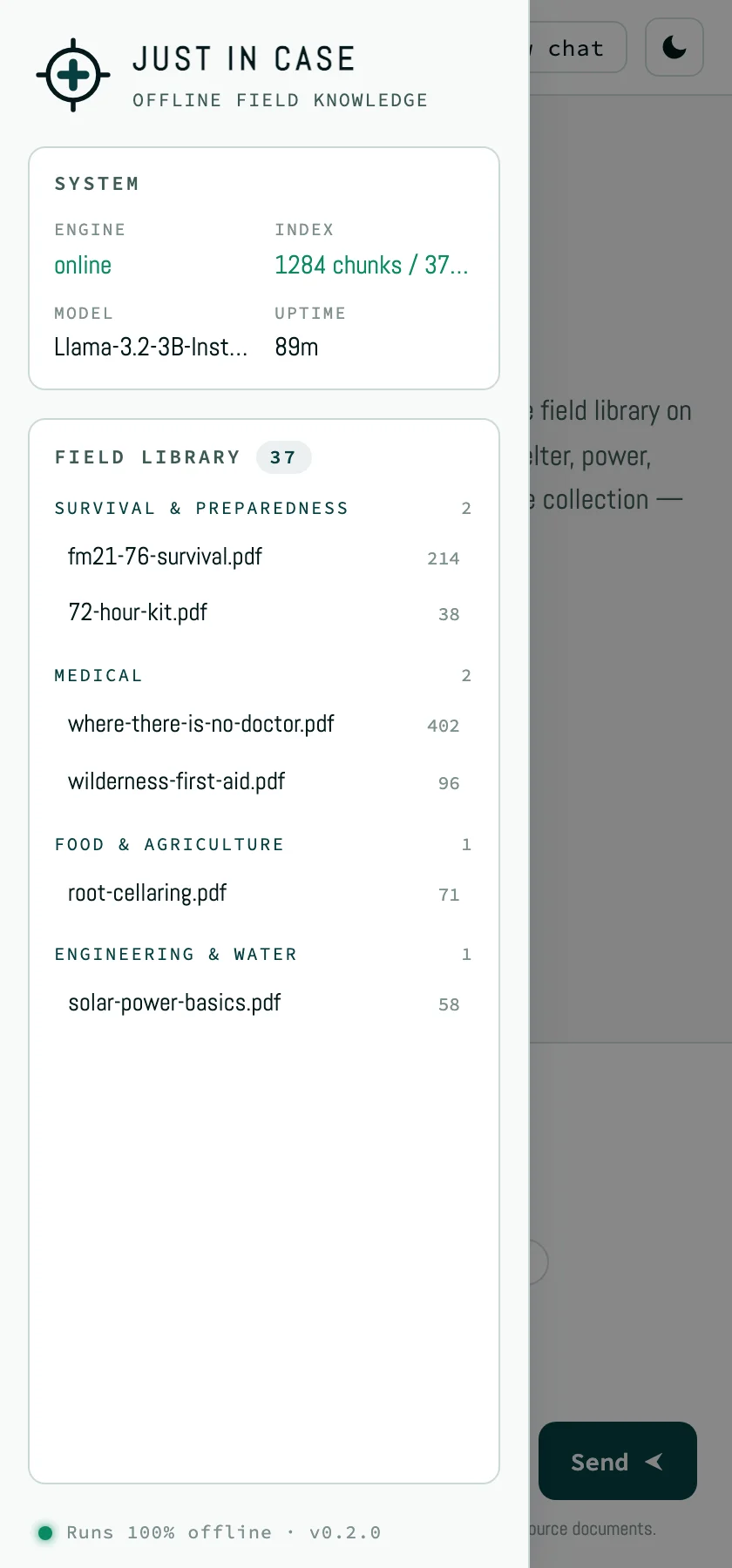
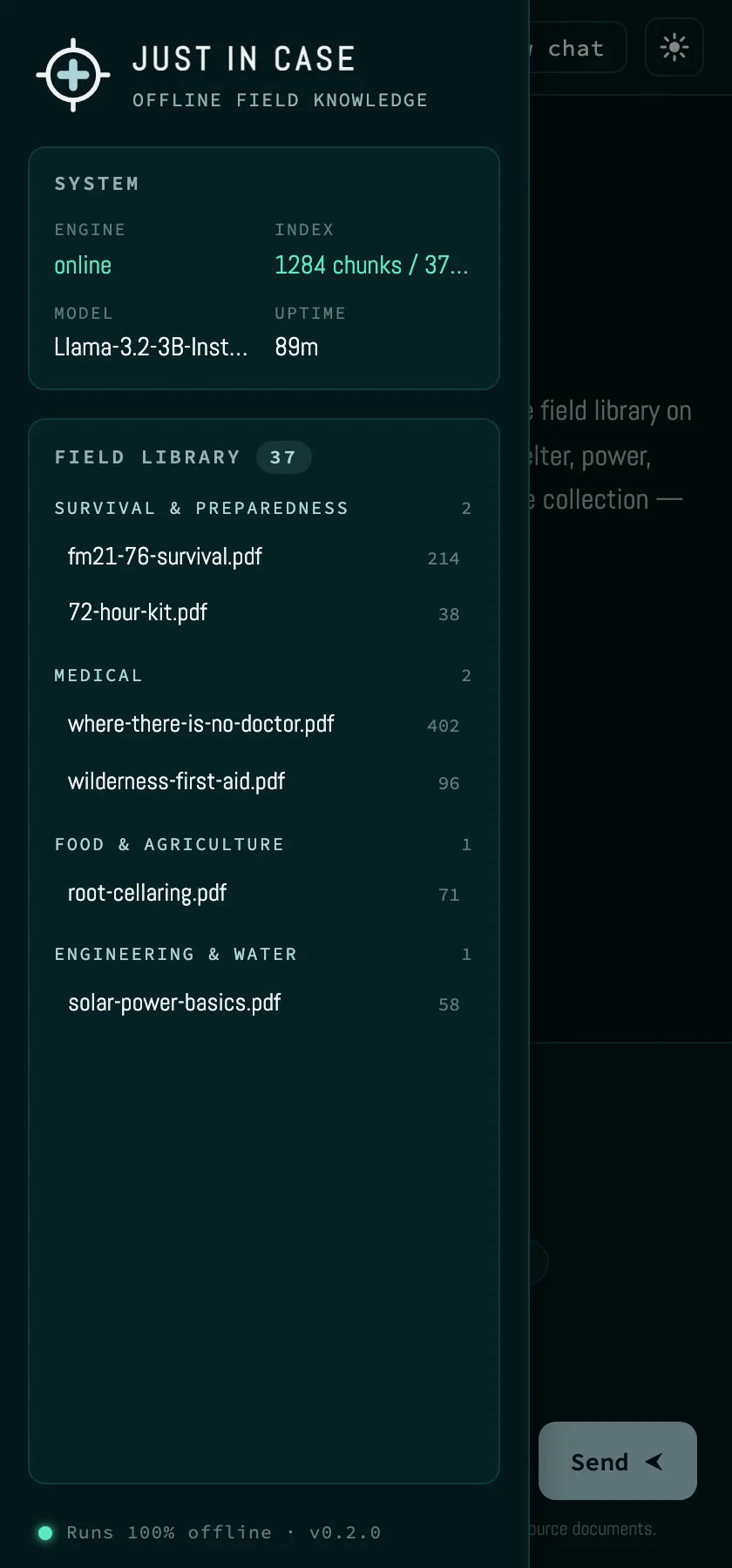
The offline emergency-knowledge app — a local, source-cited assistant grounded in an on-device field library. Its console-style UI uses the monospace stack and teal accents. Five surfaces: the empty first-run state, the welcome/idle screen, a cited conversation, the degraded ‘LLM missing’ state, and the mobile layout with the drawer open.
First run
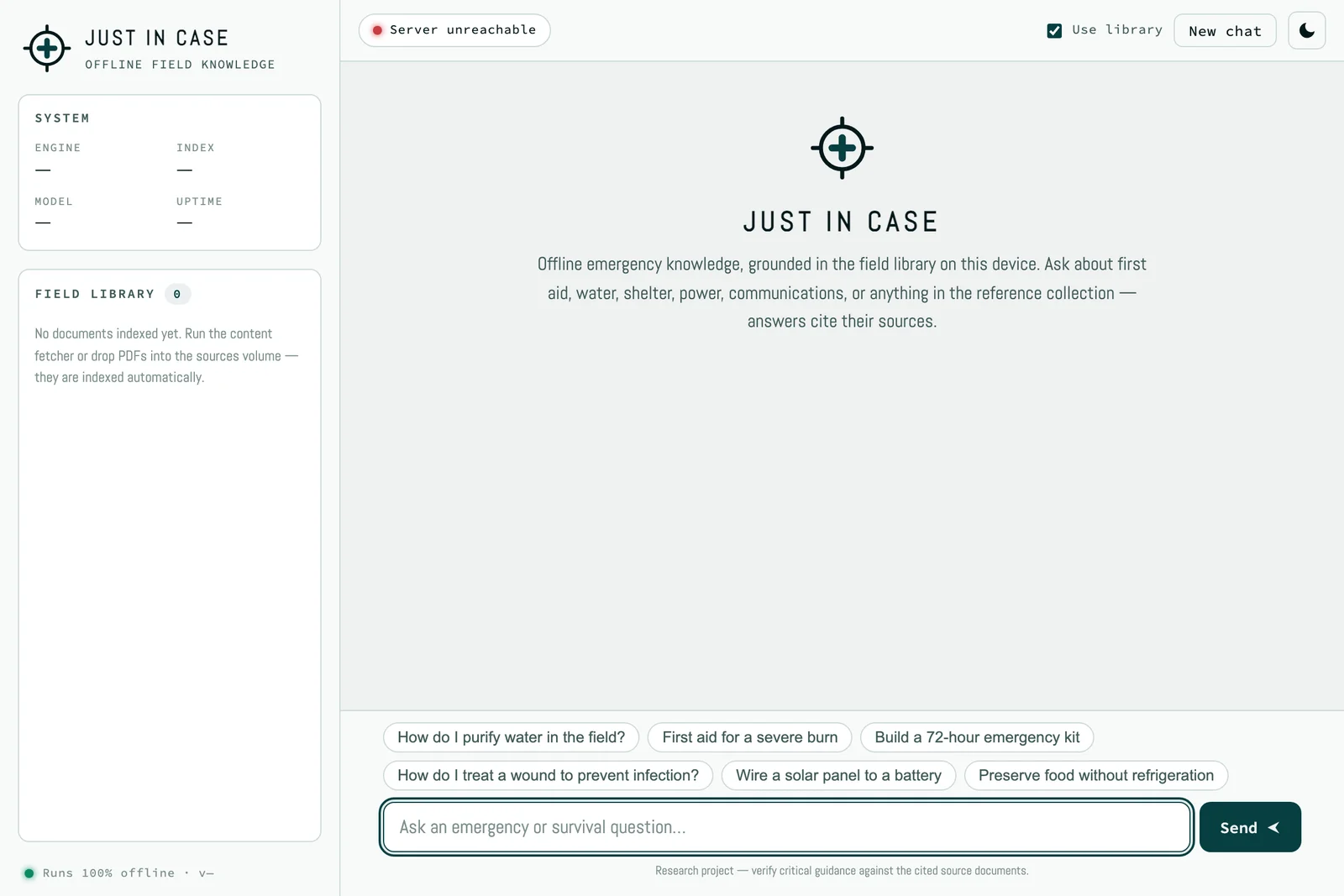
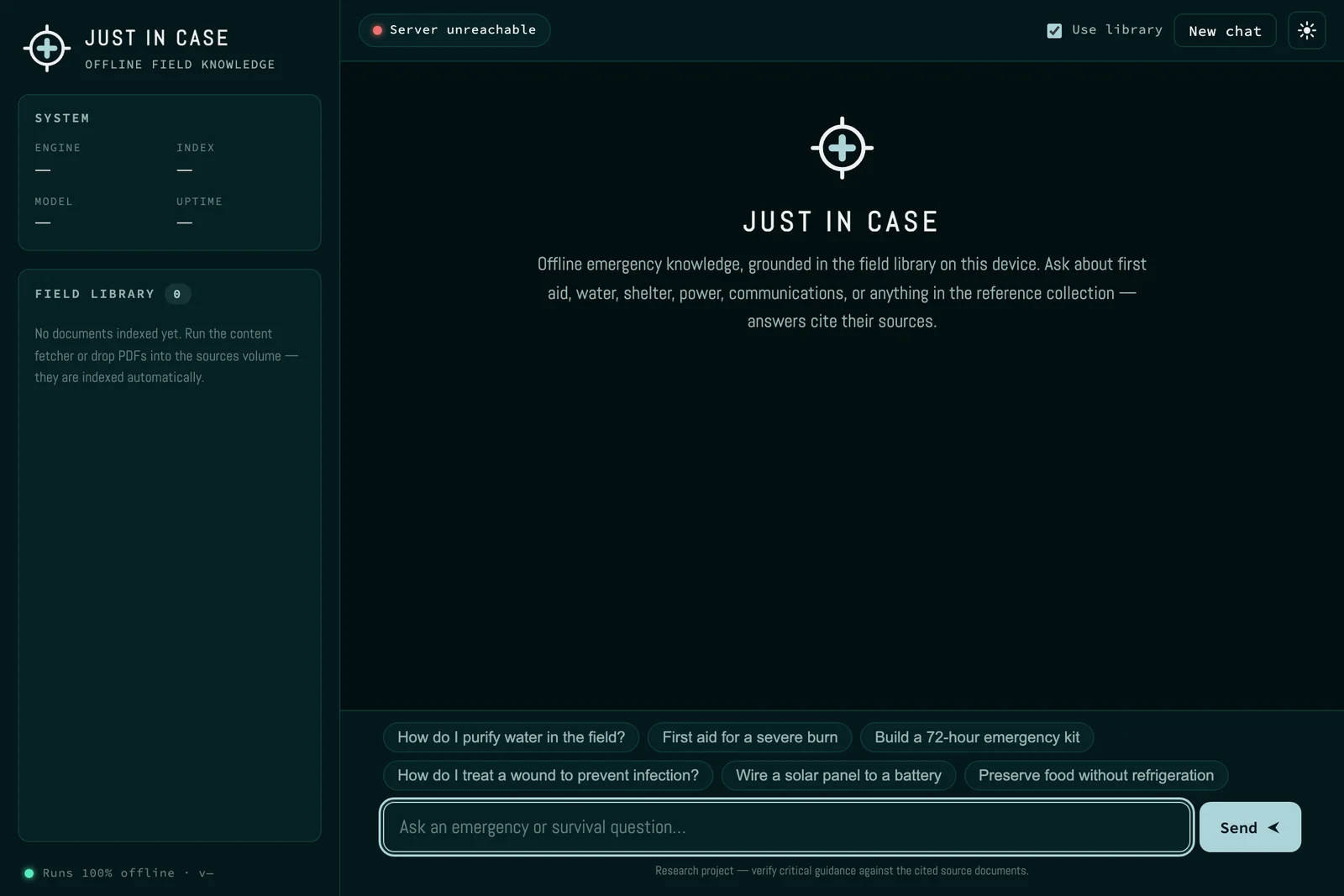
Welcome
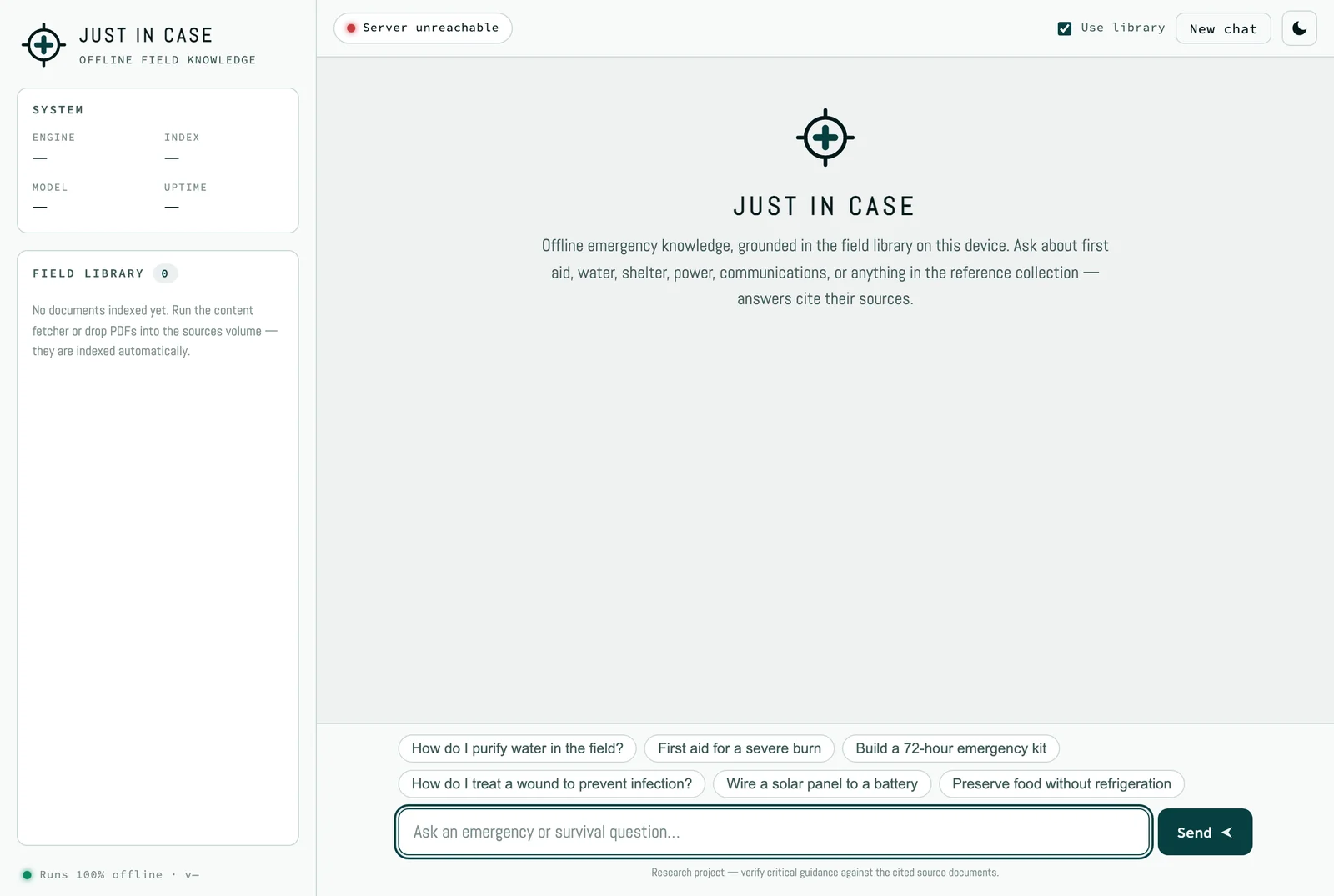
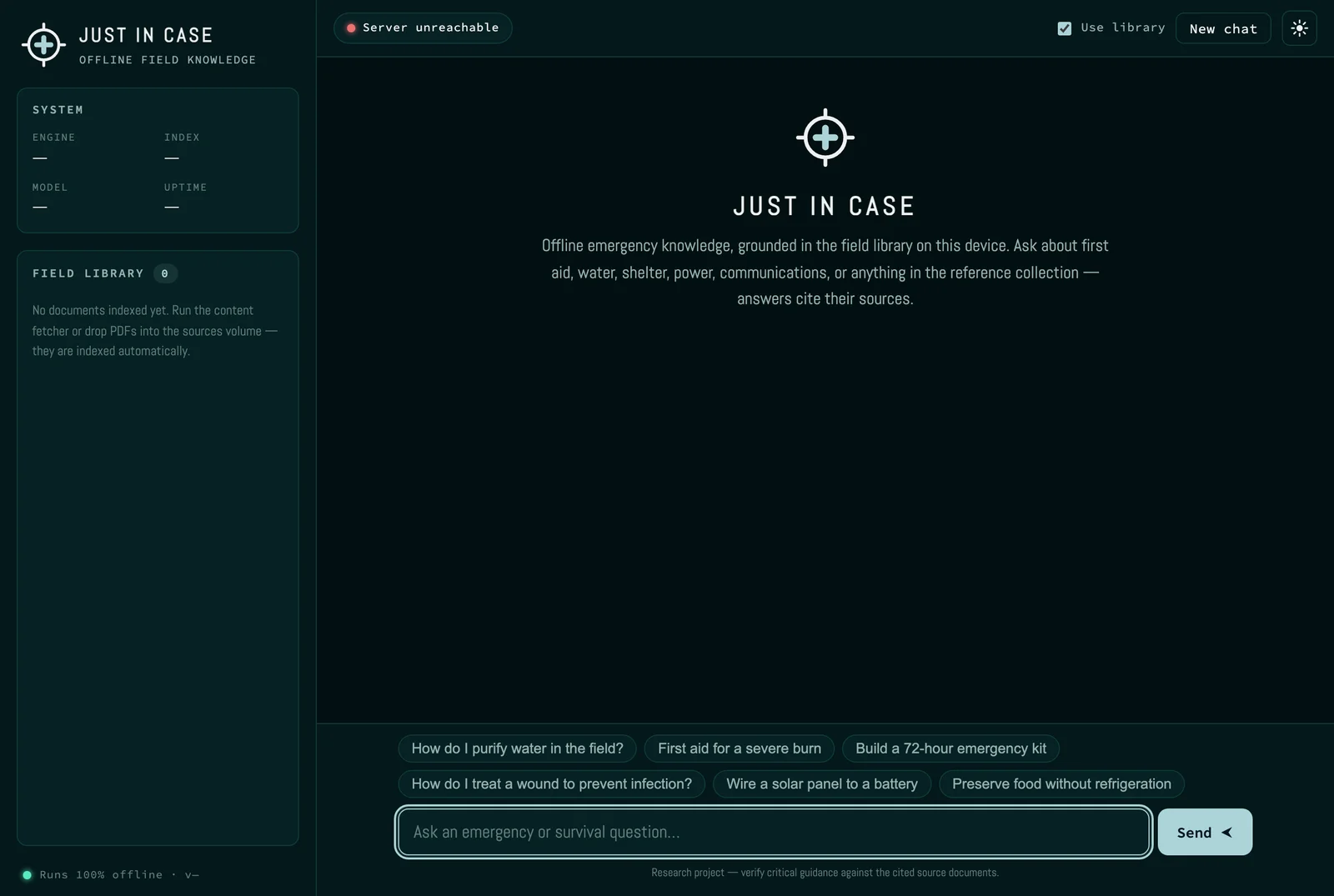
Conversation
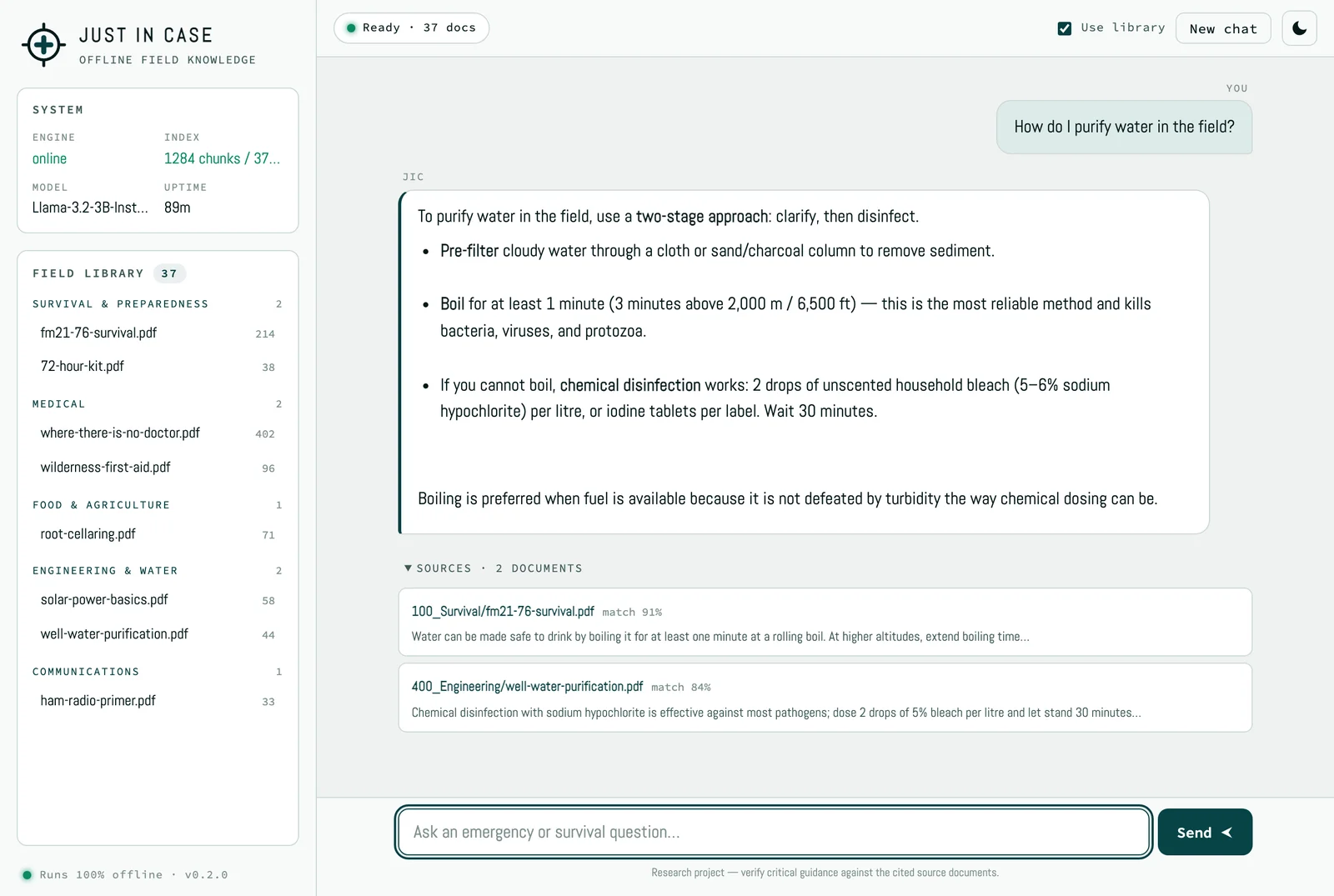
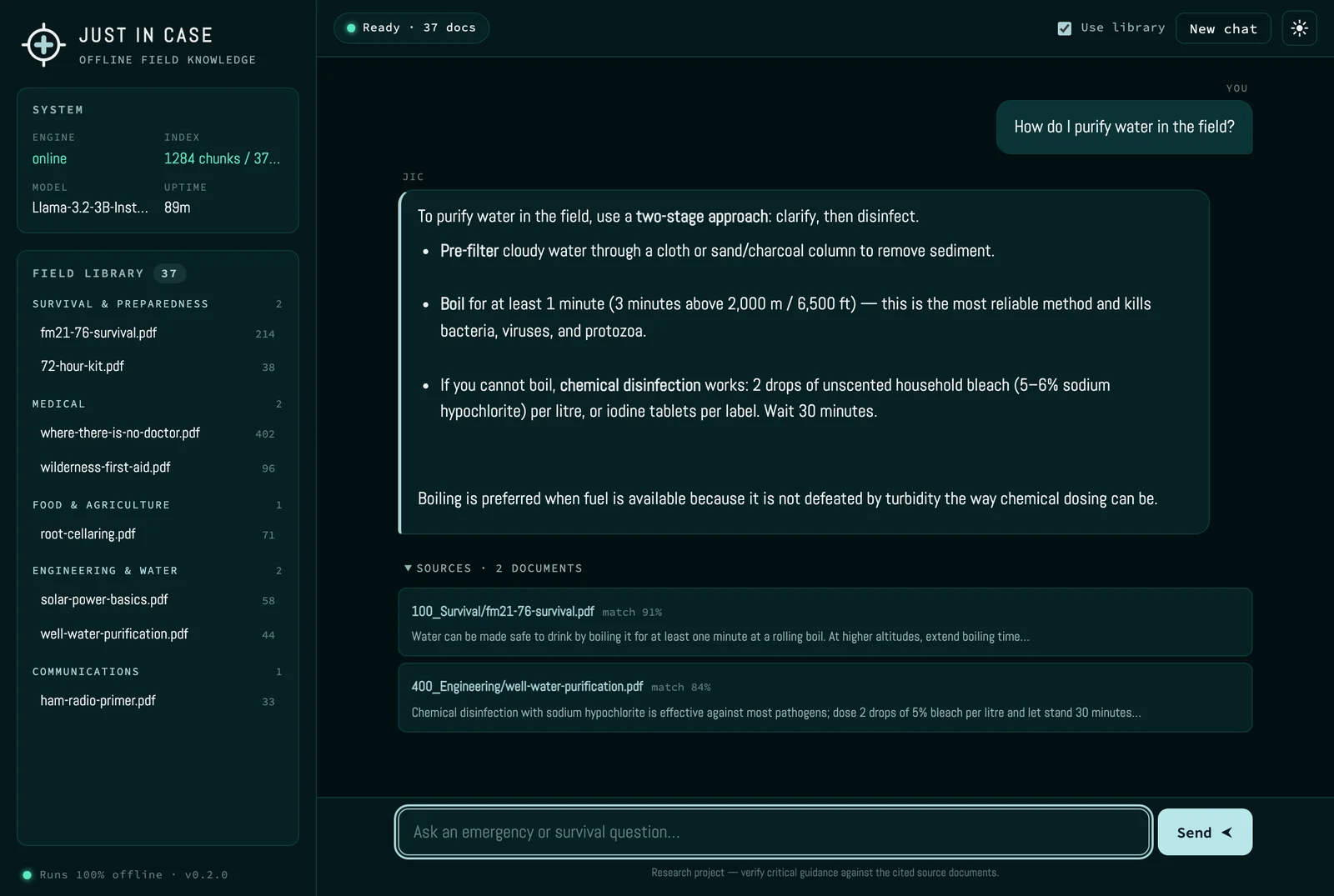
Degraded — LLM missing
Mobile
CI-SquareSpace-Customizations
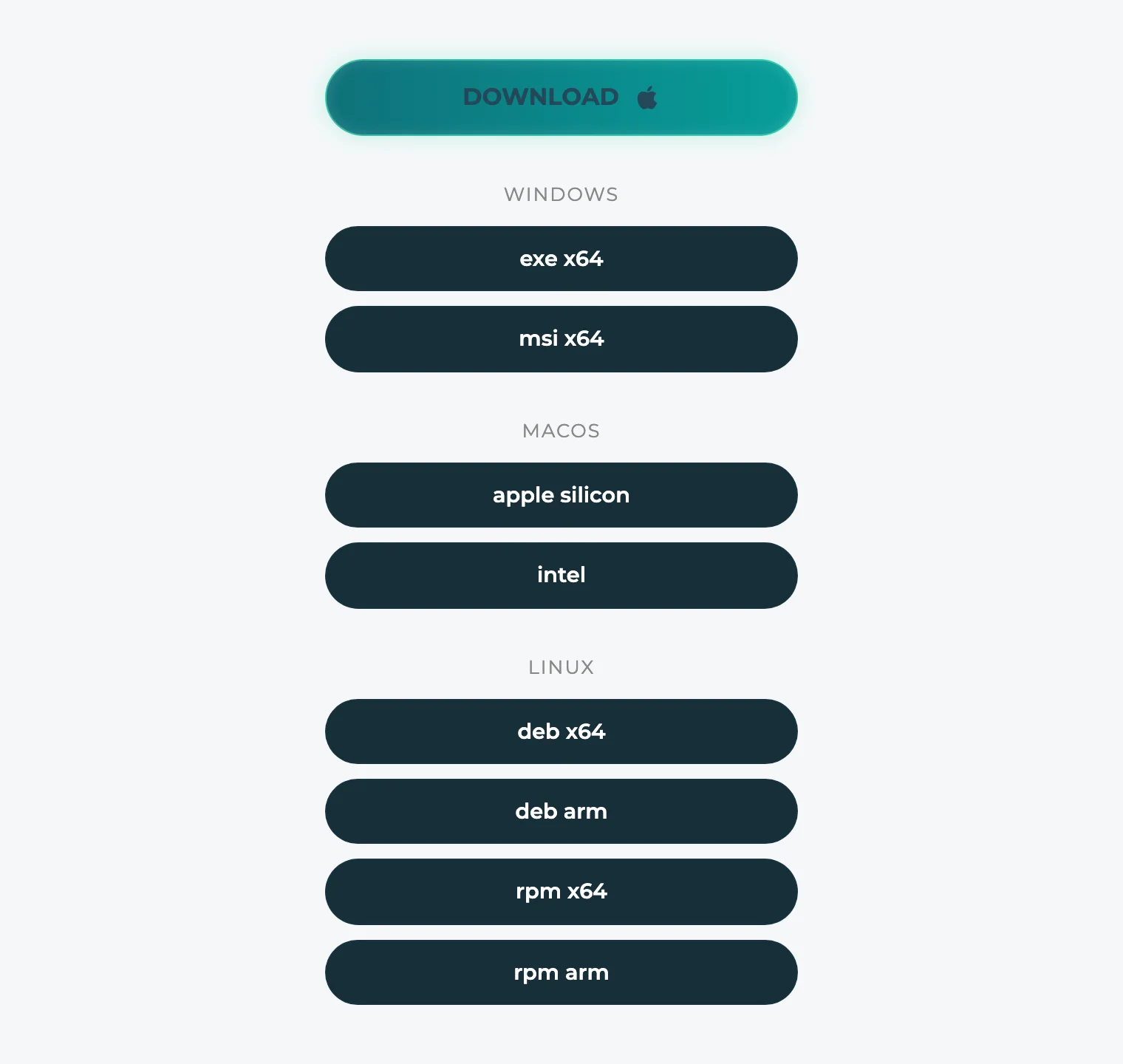
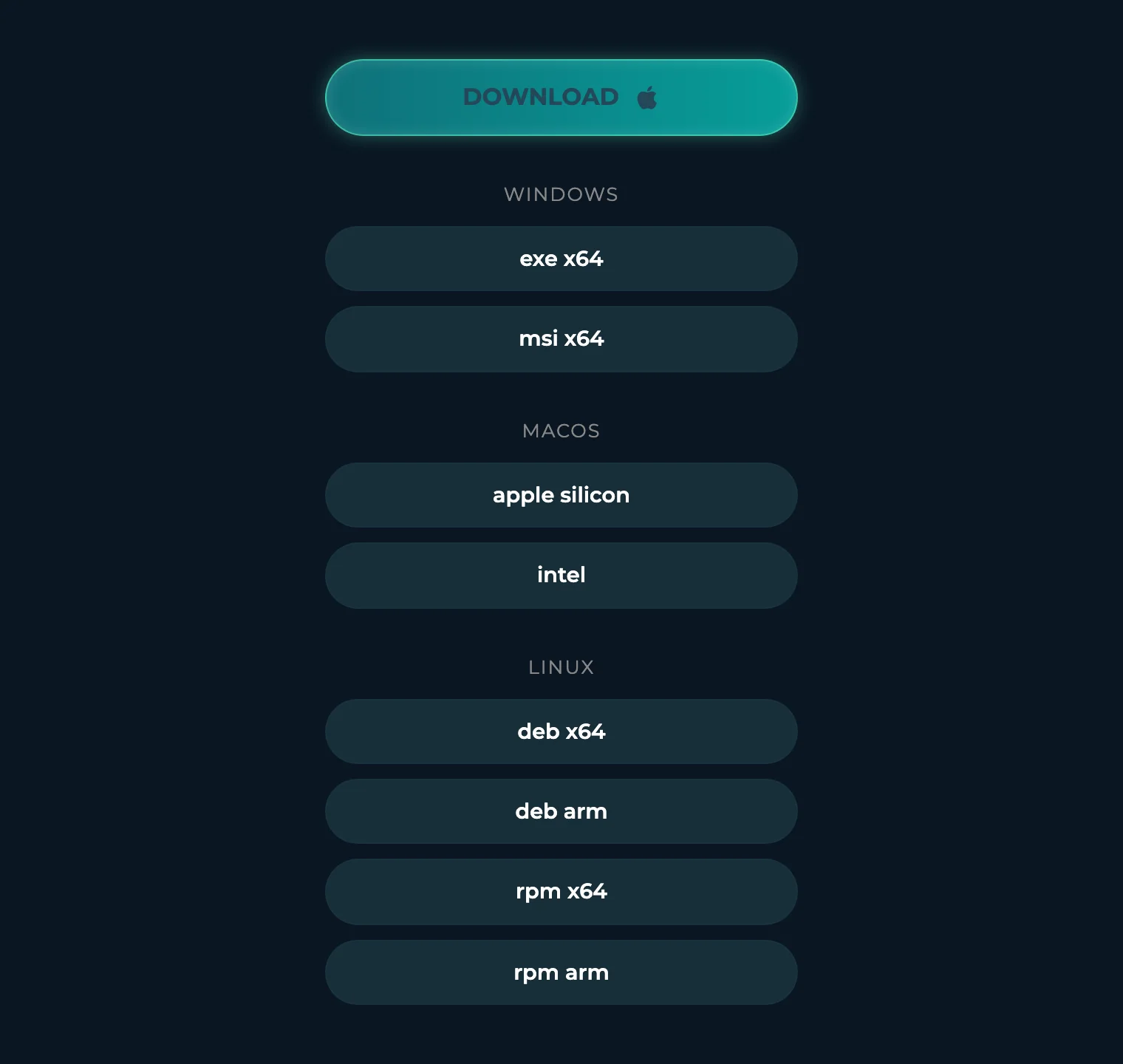
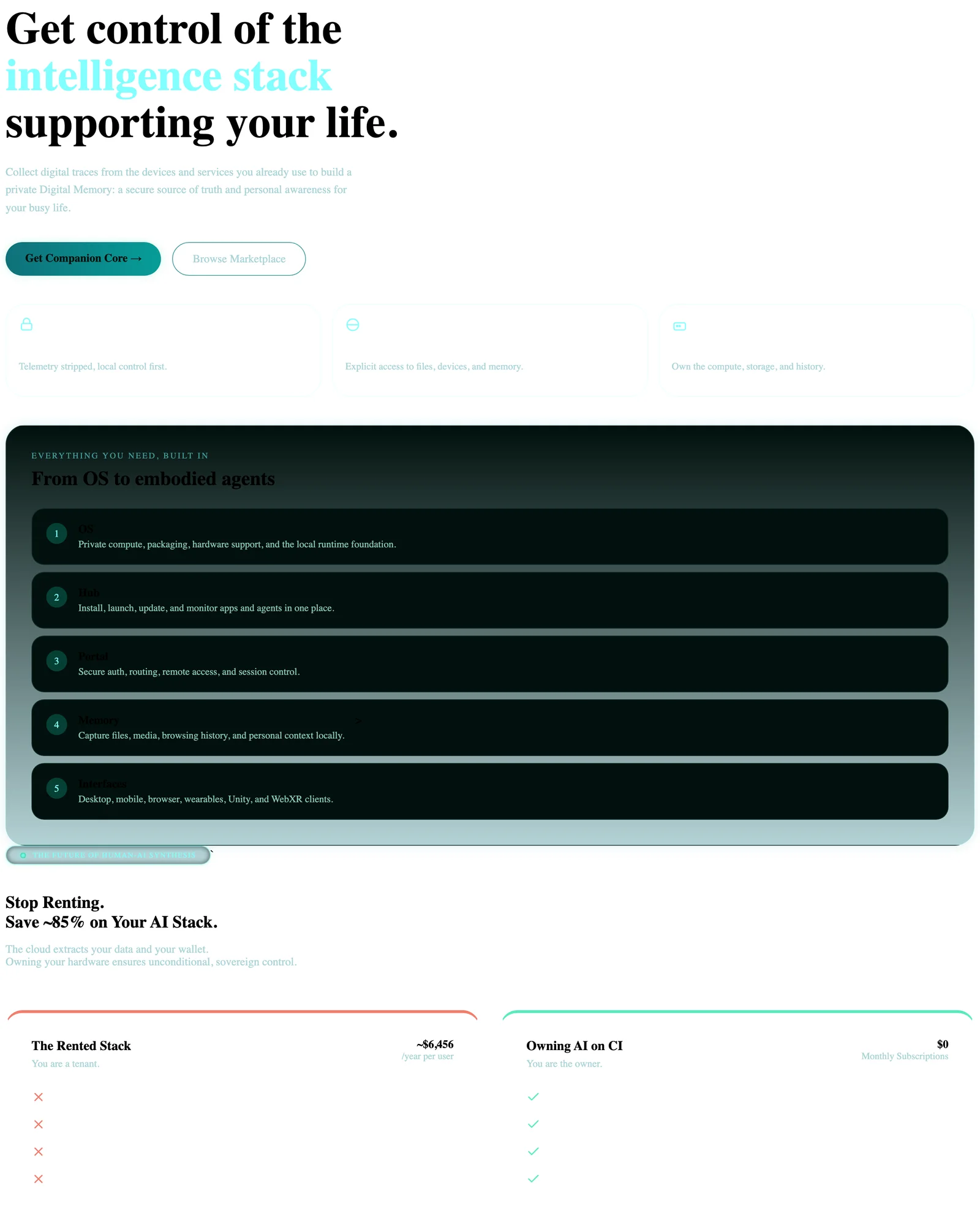
The download surface for the Hub desktop installers, embedded on the marketing site, plus the Companion Core marketing landing page.
Hub download button
Marketing landing (light only)
The Companion Core marketing landing — ‘Get control of the intelligence stack supporting your life’ — with the layered OS → Hub → Portal → Memory → Interfaces stack and the rented-vs-owned comparison. Captured in light mode.
Dark-only captures
These surfaces were captured in dark mode only — their default and primary theme.
CI-OS — device setup portal
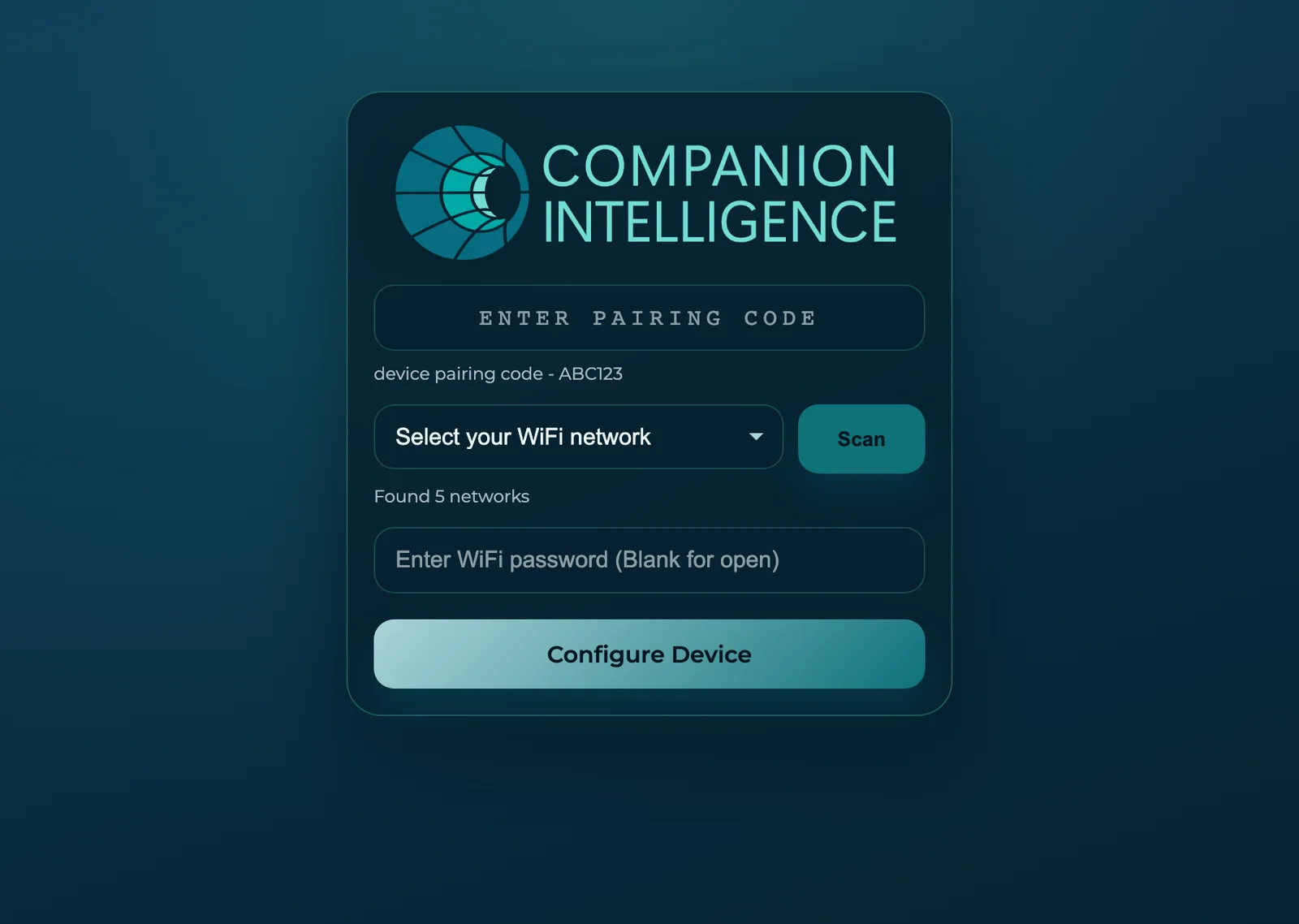
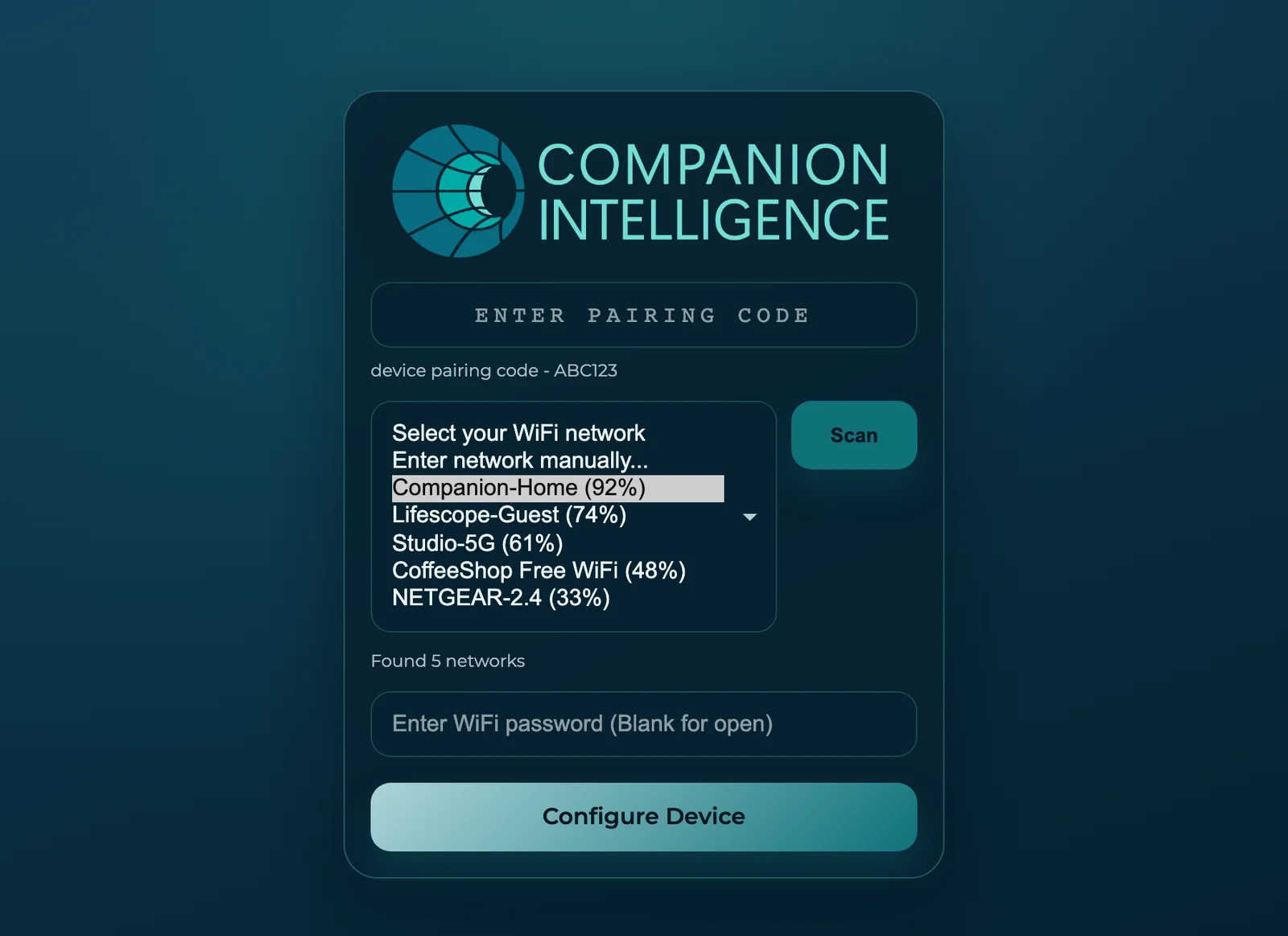
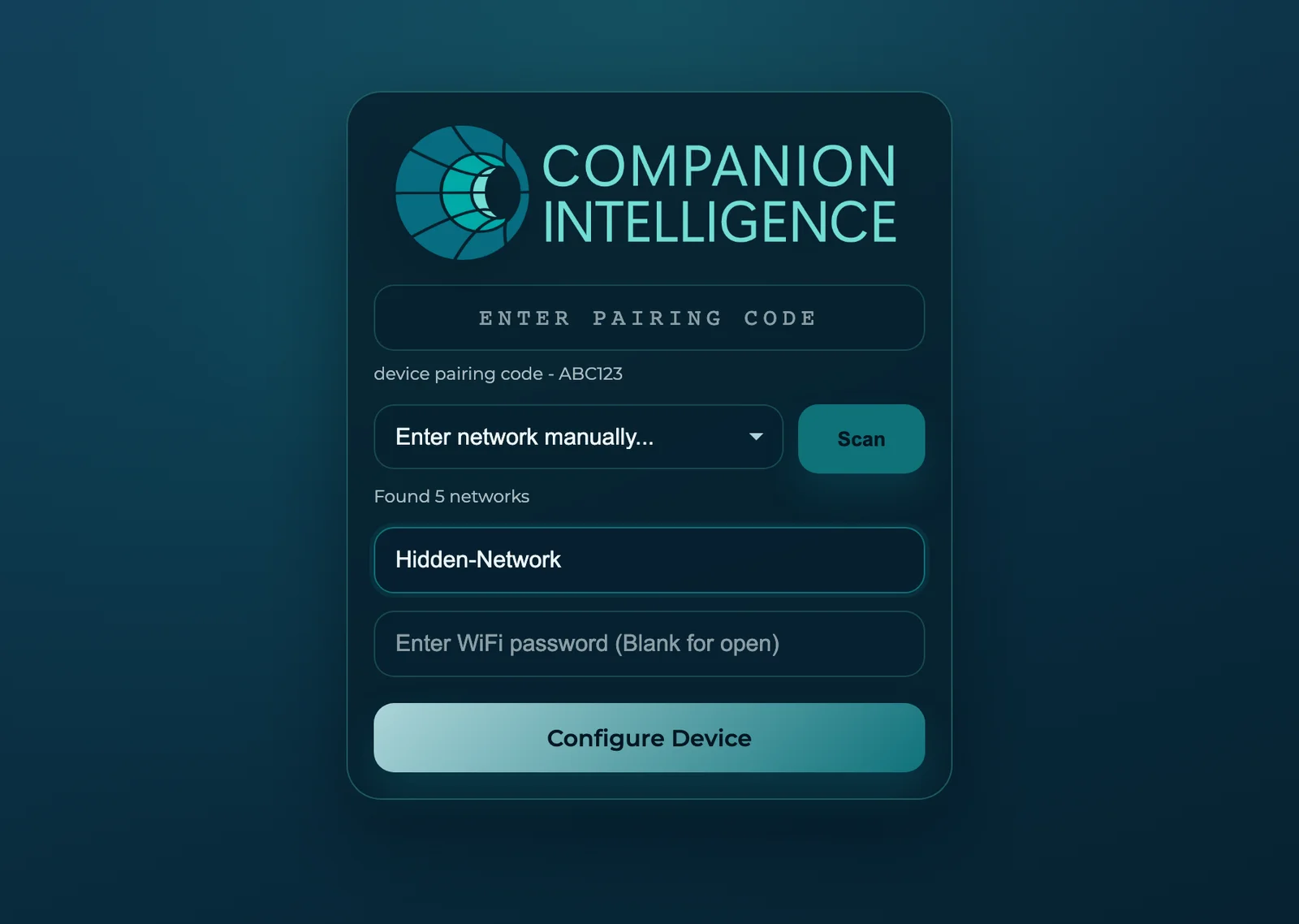
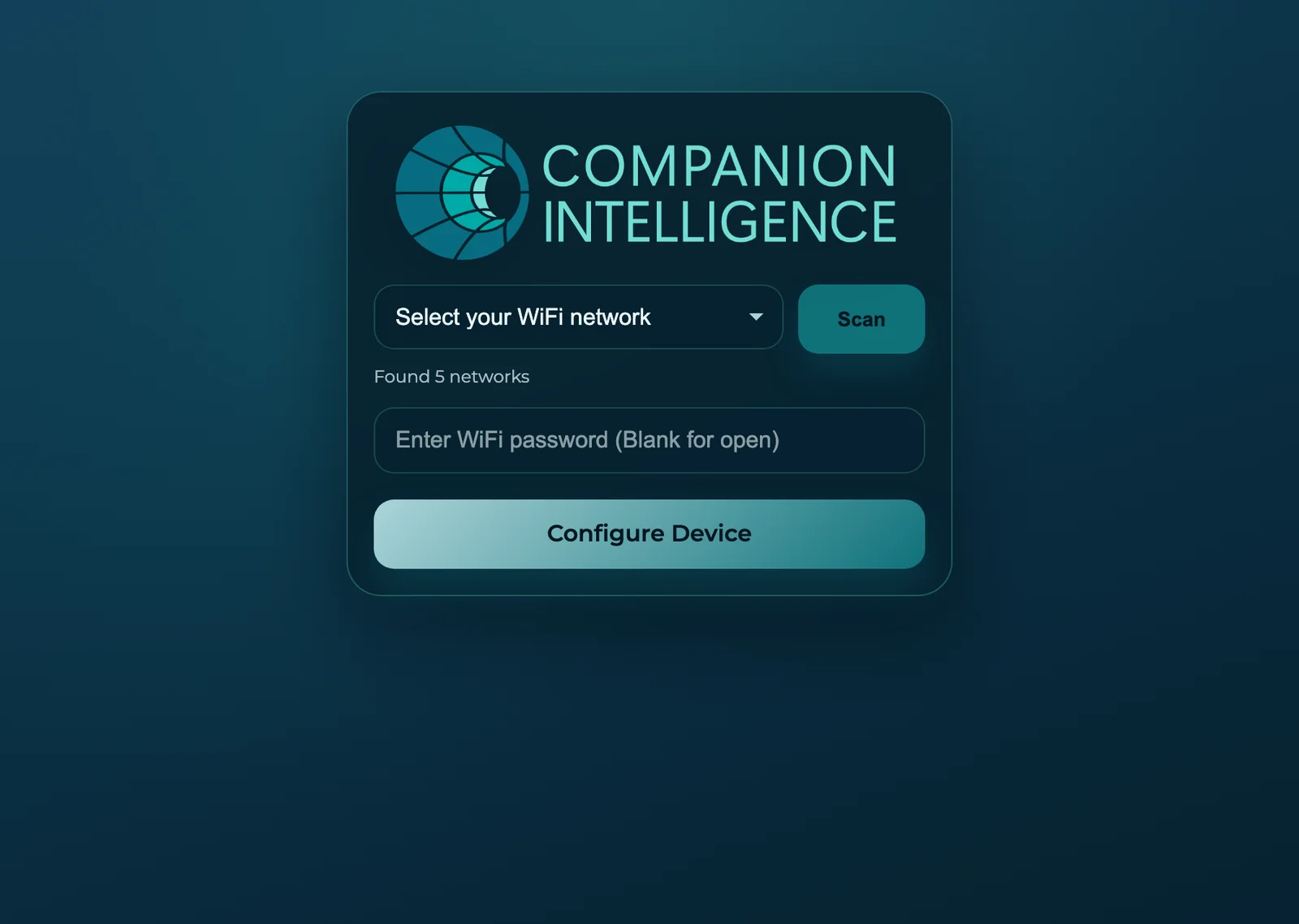
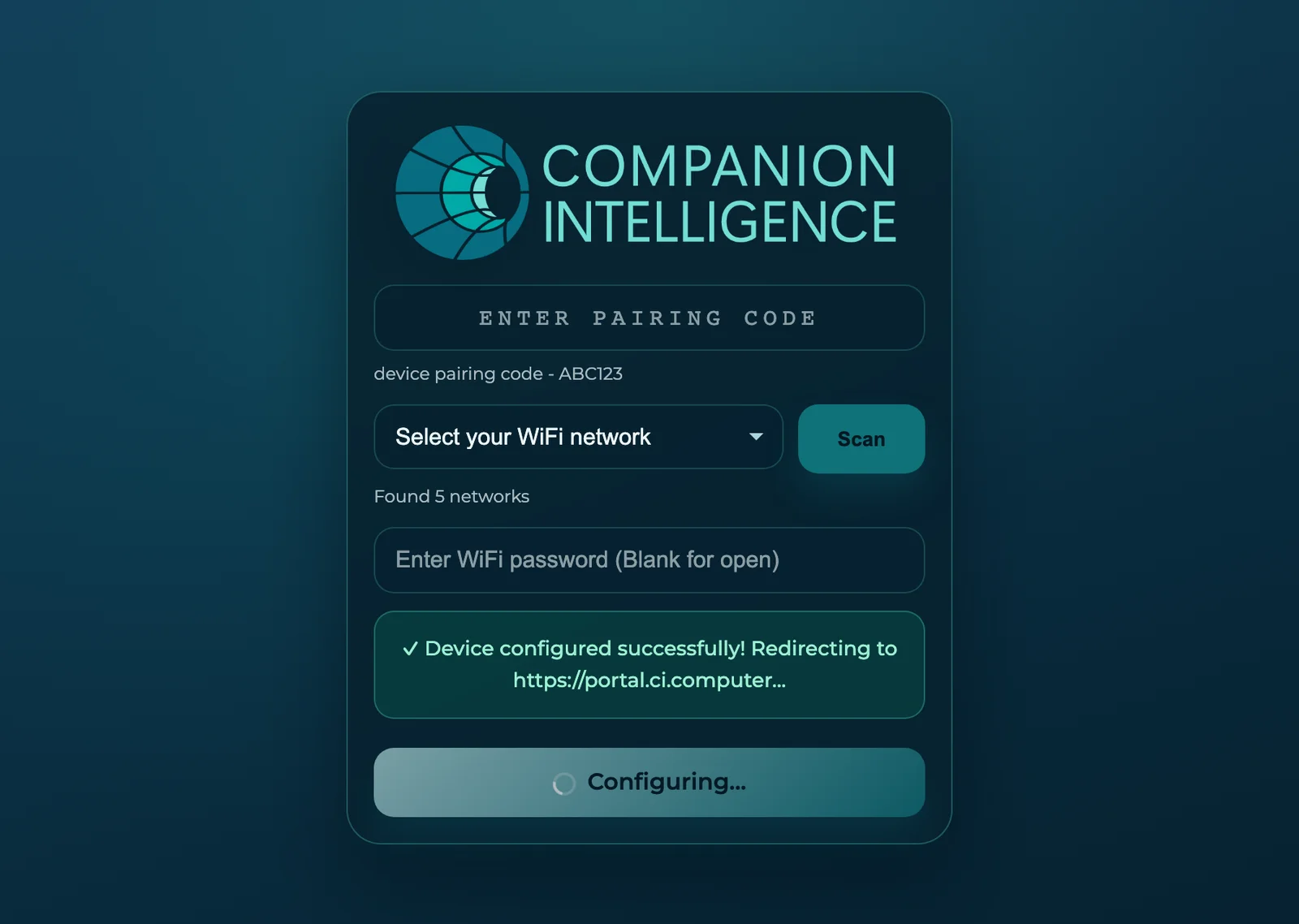
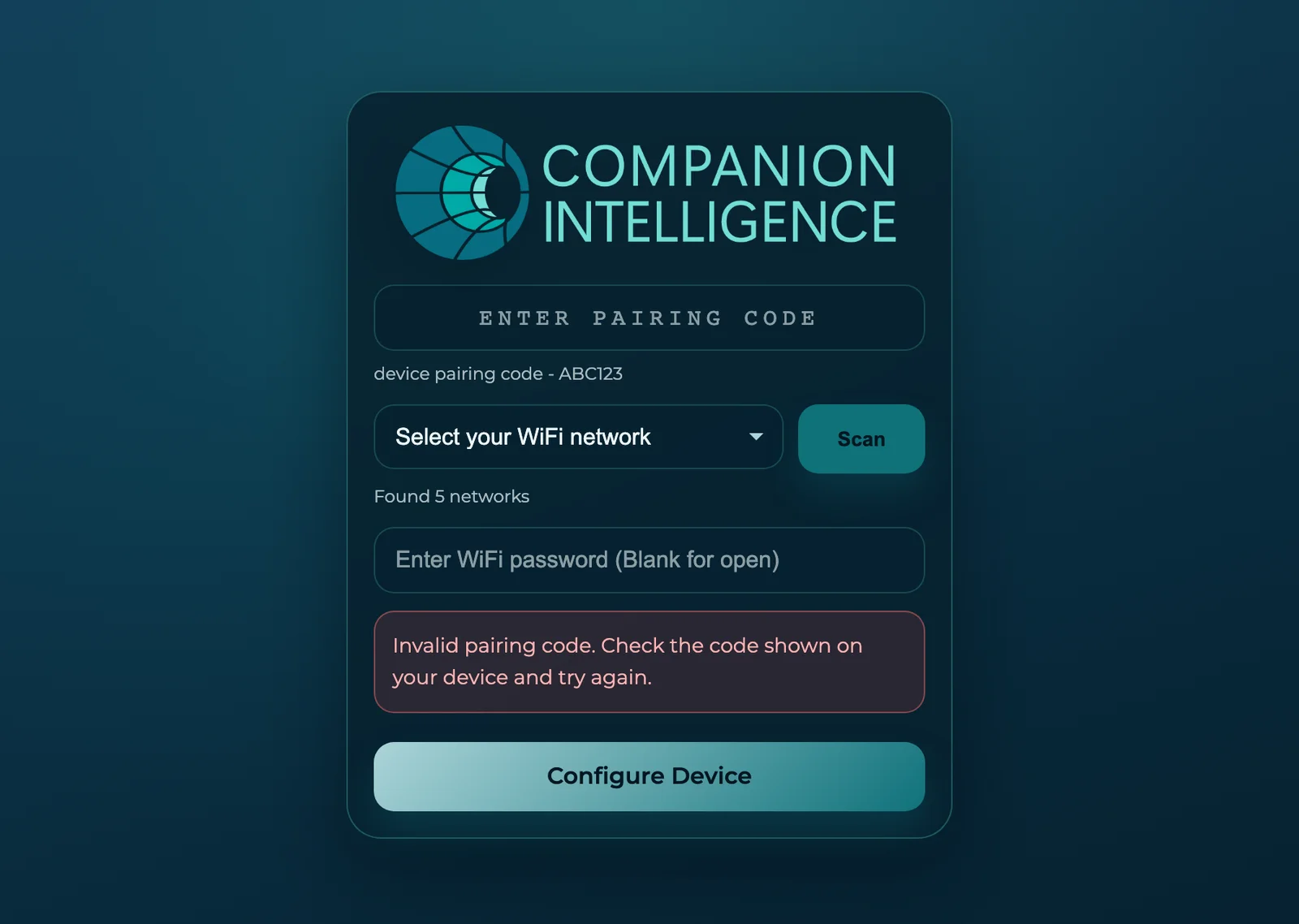
The on-device Wi-Fi and pairing setup portal shown on first boot, on the deep-navy Companion Intelligence brand surface. Six states: the initial pairing form, the scanned-networks dropdown, the manual-network entry, the no-pairing-code variant, the success/redirect state, and the invalid-code error.
CI-Even-Realities — glasses companion
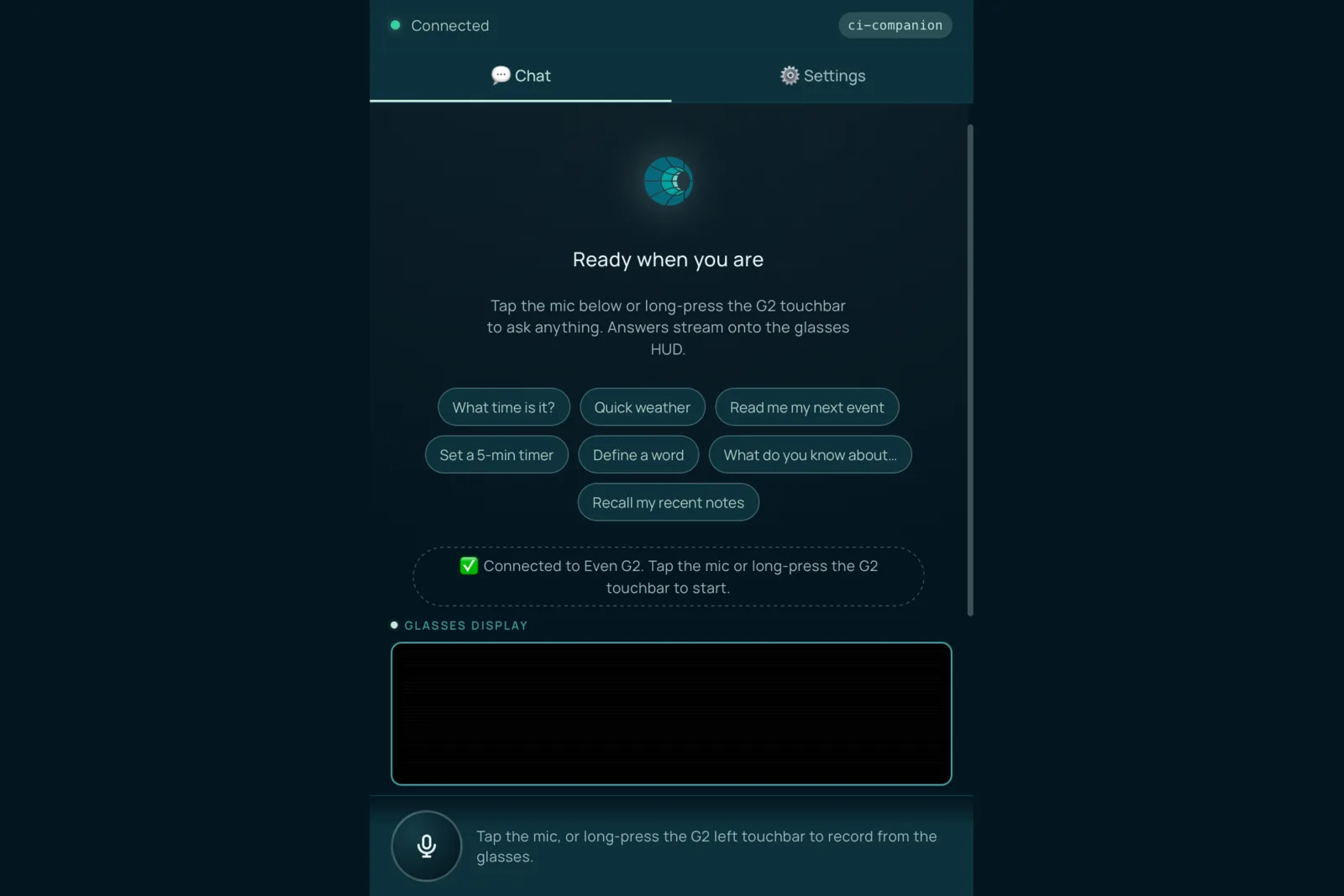
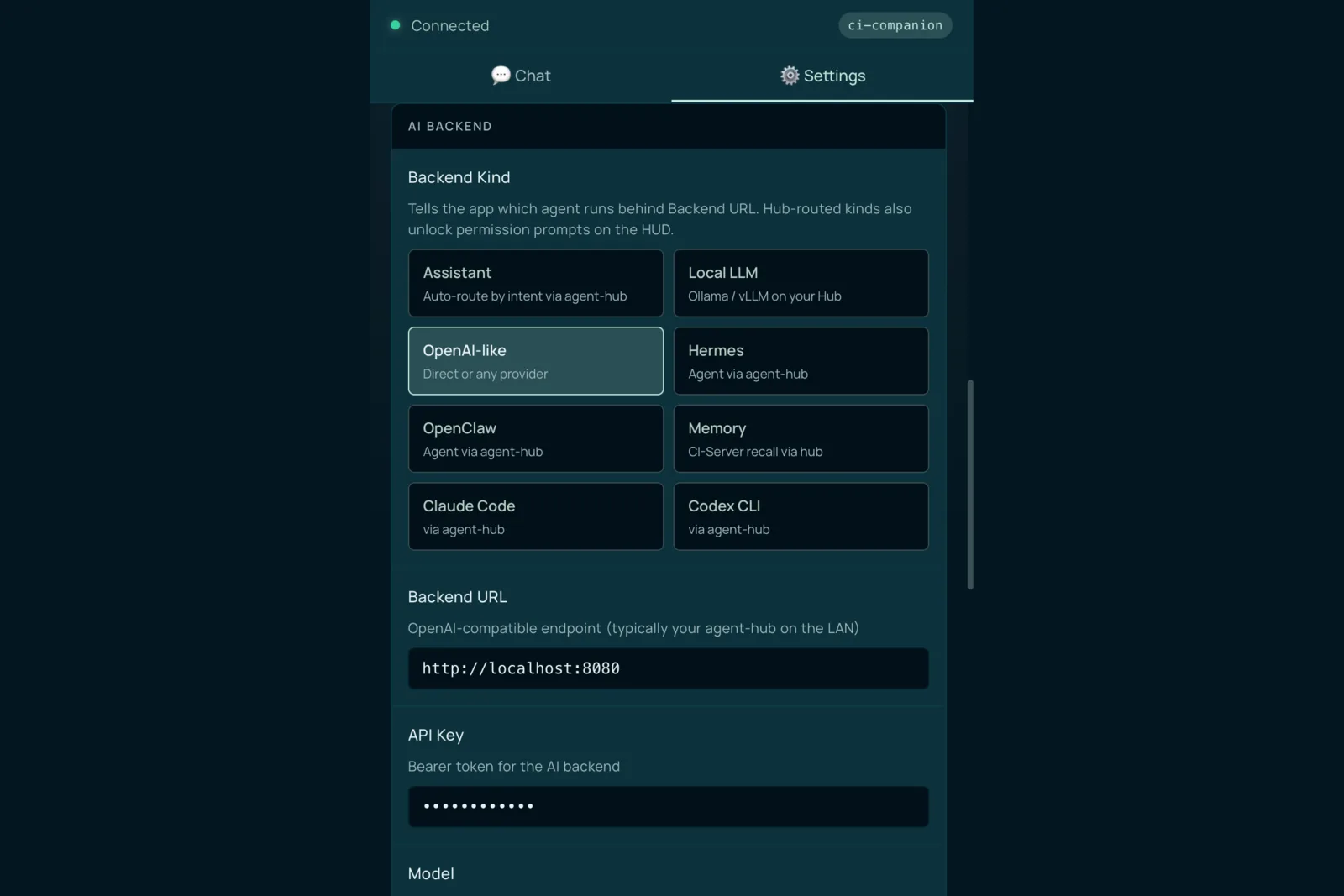
The Even Realities glasses companion. A voice-first chat surface that streams answers onto the glasses HUD, plus its AI-backend settings. Two dark-mode surfaces.
CI-Spatial-Companion-WebXR — spatial companion
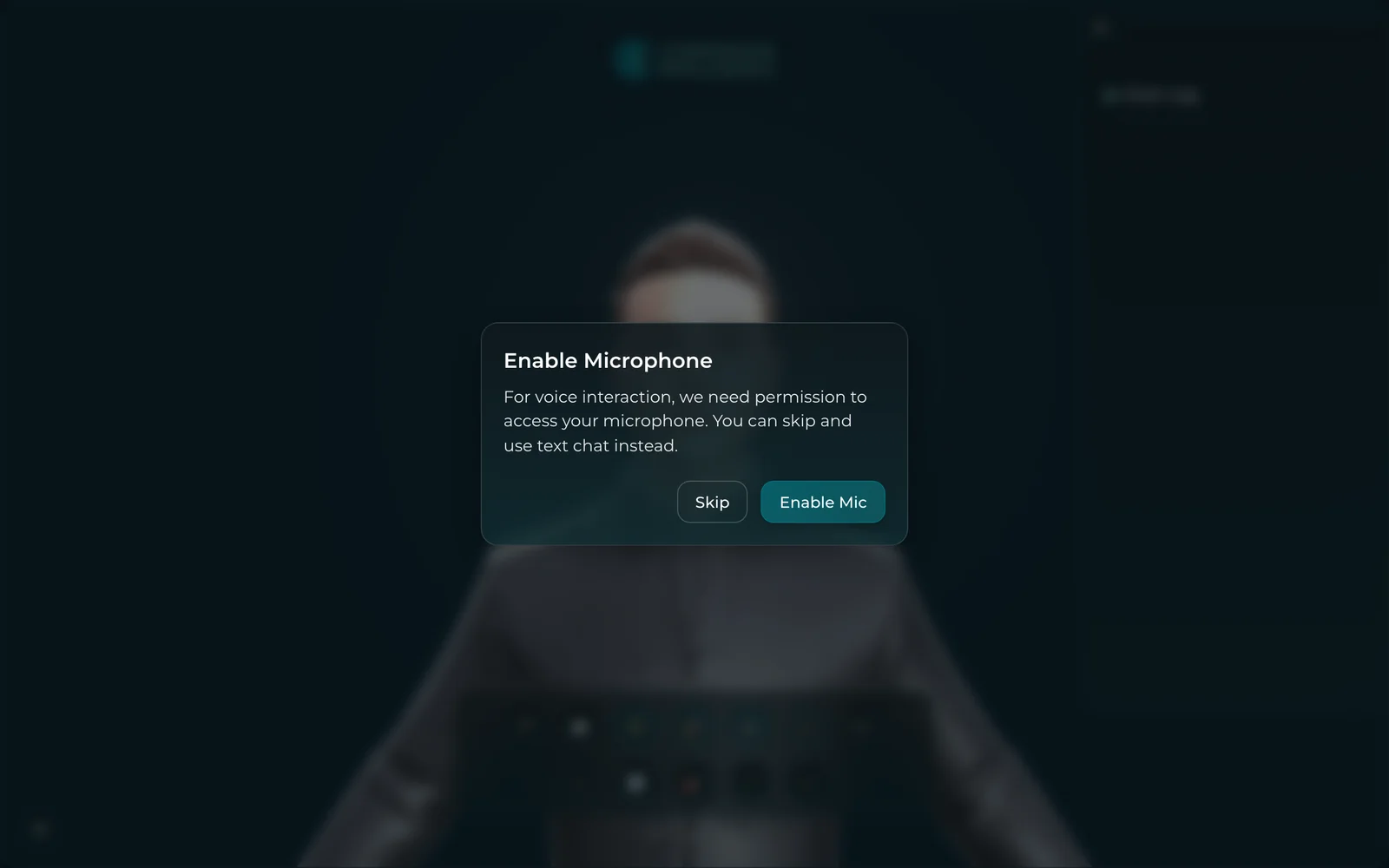
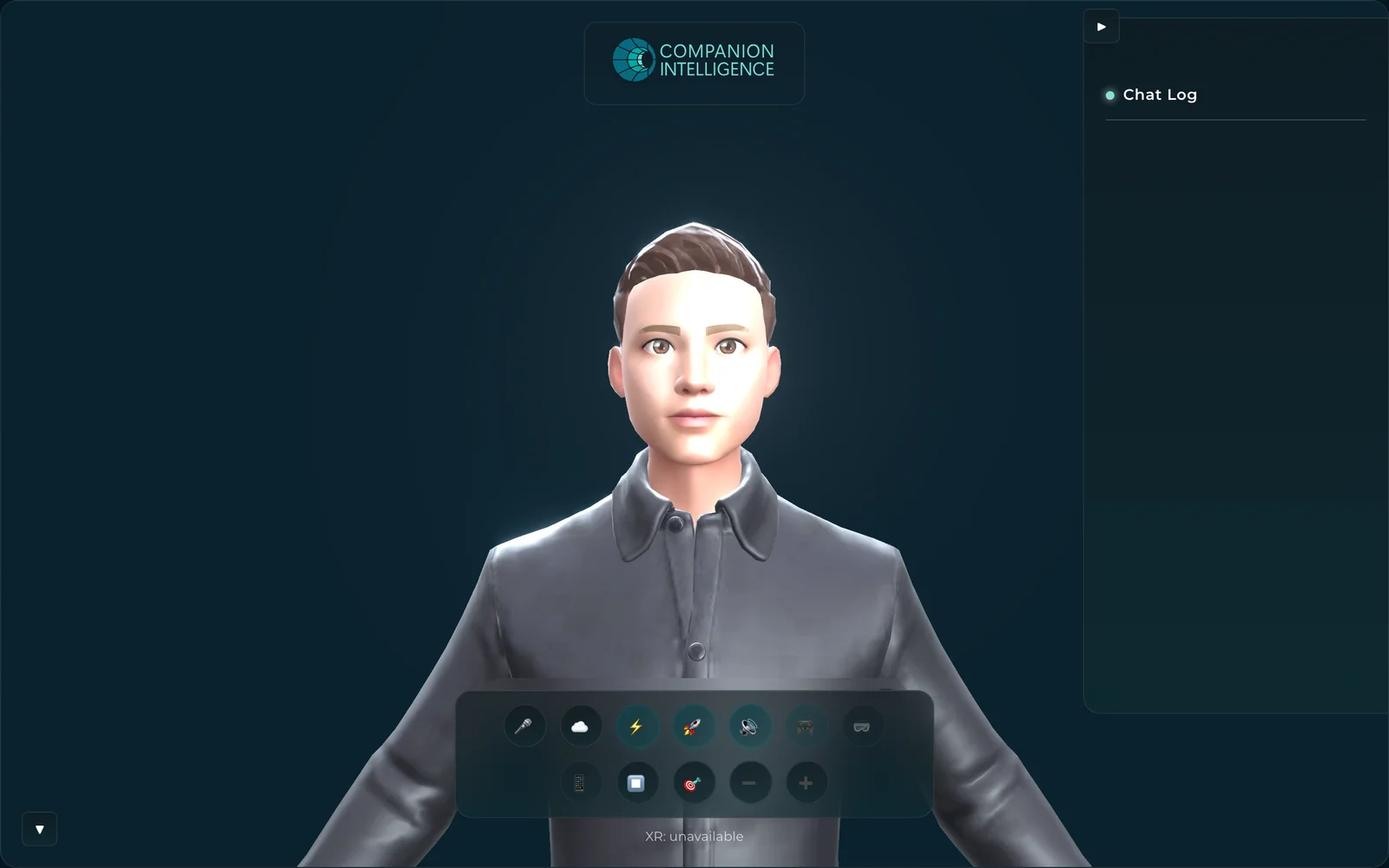
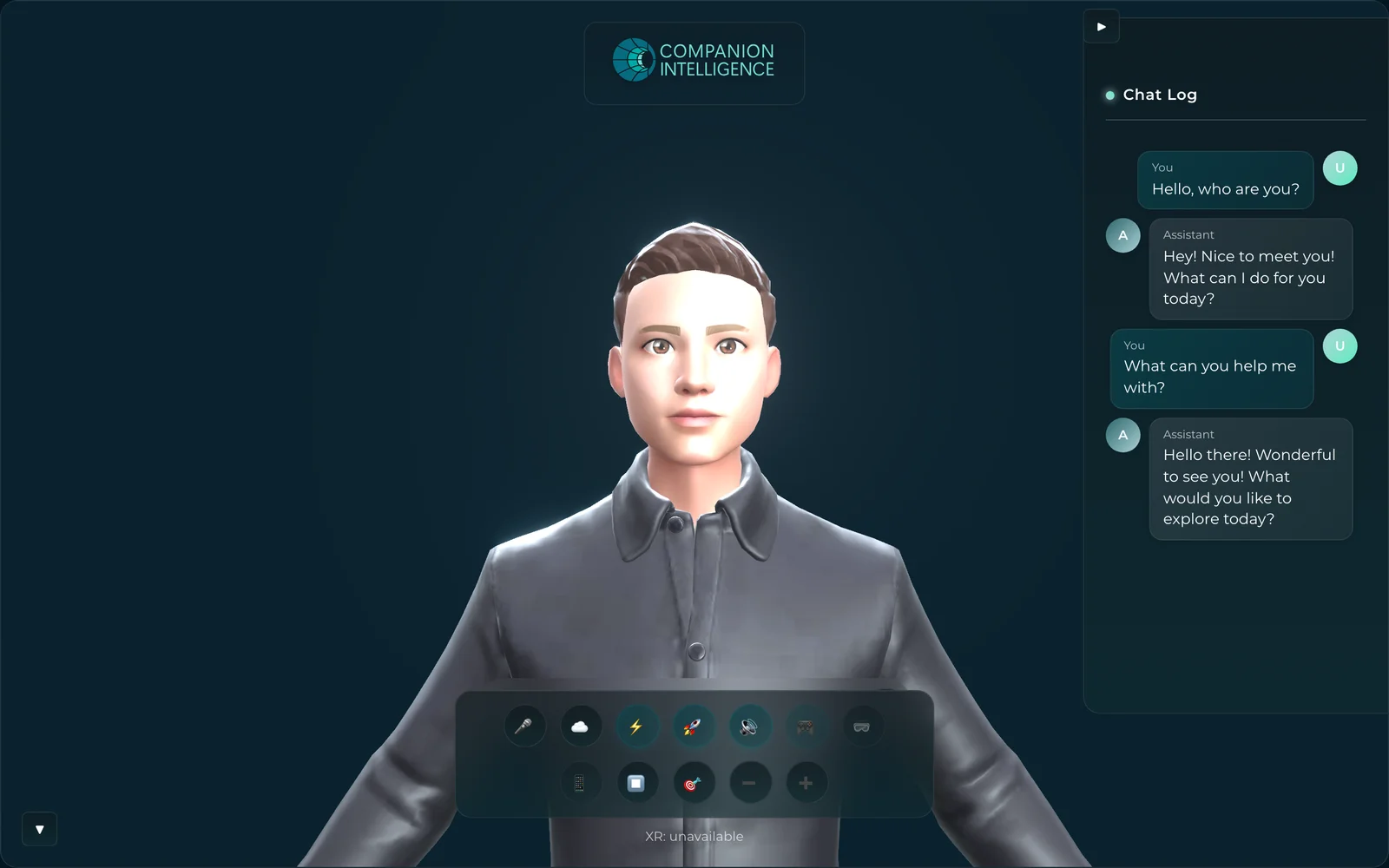
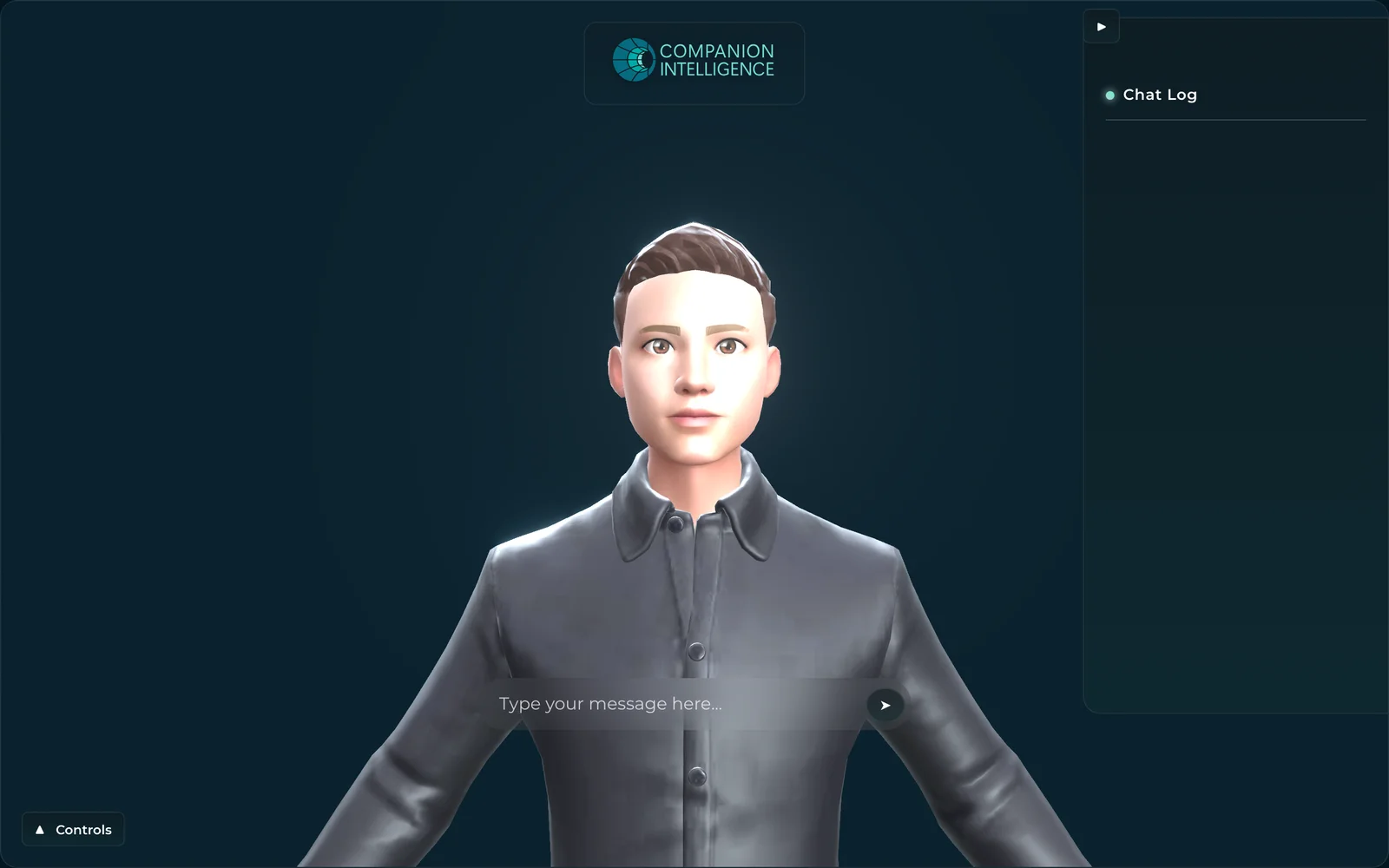
The spatial companion for WebXR — a 3D avatar with a floating action dock and Chat Log panel, rendered against a deep-navy spatial backdrop. Four dark-mode surfaces: the mic-permission onboarding, the default shell, an active chat, and the collapsed-controls text-entry state.